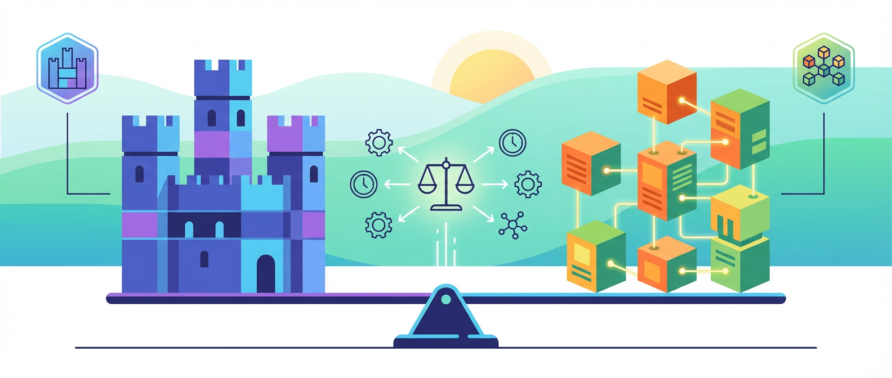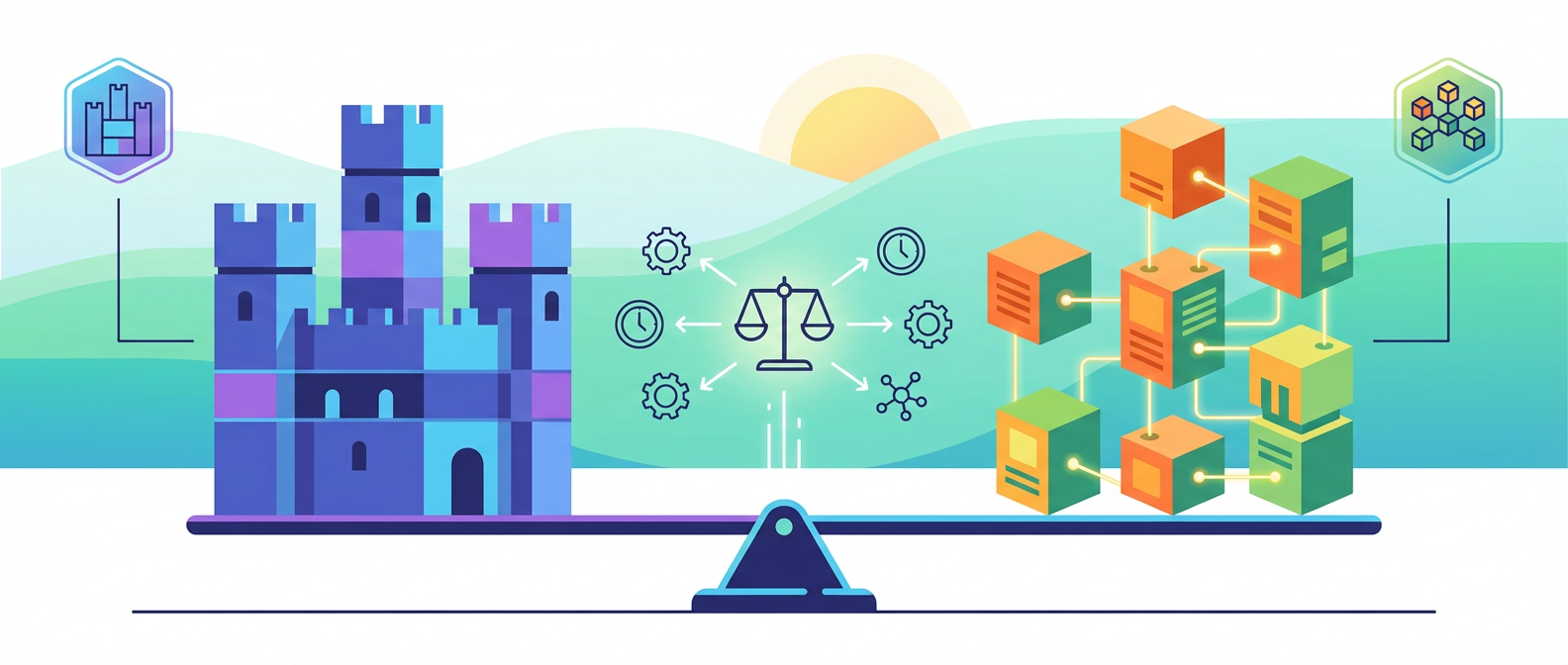

The Kubernetes Orthodoxy Problem
Walk into any tech conference today and mention container orchestration. You’ll get the same knee-jerk response: Kubernetes. It’s become the default answer to everything, like suggesting duct tape for home repairs. Sure, it works, but have we collectively forgotten that other solutions exist?

The industry’s obsession with Kubernetes has created a dangerous monoculture. Companies are cramming K8s into scenarios where a simple Docker Compose setup would be fine. I’ve watched teams spend six months configuring ingress controllers and service meshes when their entire workload could run happily on three VMs. The cognitive overhead alone should make you pause.
This isn’t anti-Kubernetes sentiment. It’s a call for engineering sanity. Kubernetes solves real problems at scale, but it introduces complexity that many organizations simply don’t need. When your “microservices” architecture is five containers that talk to each other constantly, you might have bigger architectural concerns than orchestration.

Docker Swarm: The Underdog That Actually Works
Remember Docker Swarm? While everyone was busy learning YAML archaeology for Kubernetes manifests, Swarm quietly delivered on the original promise of simple container orchestration. The setup takes minutes, not months. The learning curve is a gentle hill rather than Mount Everest.
Swarm’s biggest strength is also its perceived weakness: simplicity. You get service discovery, load balancing, and rolling updates without a PhD in cluster administration. The networking just works. Secrets management doesn’t require a separate certification course. For many use cases, this simplicity translates directly to operational stability.
The market rejected Swarm not because it was technically inferior, but because it wasn’t complex enough to generate consulting revenue. Sometimes the boring solution is the right solution. If your team can understand your orchestration platform in a week rather than a quarter, that’s a feature, not a bug.
Deployment Strategy Theater
Let’s talk about deployment strategies, where marketing terminology has completely overtaken engineering practicality. Blue-green deployments sound impressive in architecture reviews, but they double your infrastructure costs for the privilege of instant rollbacks. Canary deployments get pitched as risk reduction, but I’ve seen more outages caused by poorly configured traffic splitting than by traditional rolling updates.
The dirty secret about deployment strategies is that most applications don’t need the complexity. If you’re running a CRUD API that handles a few thousand requests per minute, a well-executed rolling update with proper health checks will work better than an elaborate canary setup that nobody on your team fully understands.
Feature flags provide better risk mitigation than deployment gymnastics. They let you separate deployment from activation, giving you the control benefits of canary deployments without the infrastructure overhead. But feature flags don’t generate the same architectural excitement as setting up Istio service mesh for traffic splitting.
Before implementing any fancy deployment strategy, ask yourself: what problem am I actually solving? If the answer is “showing off in the next engineering all-hands,” you might want to reconsider.
The Resource Allocation Reality Check
Container orchestration platforms love to promise efficient resource utilization, but the reality often disappoints. Kubernetes’ resource requests and limits system creates a false sense of precision. You end up with containers requesting 100m CPU and 128Mi memory because those numbers look scientific, not because they reflect actual usage patterns.
The bin packing problem that orchestrators solve becomes academic when your containers are over-provisioned by 300%. I’ve audited clusters where nodes ran at 20% utilization because everyone was terrified of setting limits too low. The solution isn’t better algorithms. It’s better understanding of your application’s actual resource needs.
Vertical Pod Autoscaling promises to solve this automatically, but it’s basically admitting that we don’t understand our own applications well enough to configure them properly. There’s something fundamentally wrong when we need machine learning to figure out how much memory our web server requires.
The most efficient resource allocation strategy remains the least popular: actually profiling your applications under realistic load and setting appropriate limits based on data rather than guesswork.
Choose Boring Technology, Then Optimize
The best orchestration strategy is the one your team can operate reliably at 3 AM when everything is on fire. Complexity is a luxury you pay for every day, not just during implementation. The orchestration platform should fade into the background, not demand constant attention from your best engineers.
Start with the simplest solution that meets your requirements. If Docker Compose handles your workload, stick with it until it doesn’t. If you need multi-host orchestration, check whether Swarm meets your needs before jumping to Kubernetes. When you do need K8s complexity, you’ll know exactly why you’re paying that operational tax.
The goal isn’t to avoid sophisticated tools. It’s to use them intentionally. Every abstraction layer has a cost. Every deployment strategy has trade-offs. Every orchestration feature you enable becomes something else to maintain, debug, and understand.
What’s your experience with container orchestration complexity? Have you found elegant solutions that others might be overlooking, or war stories about over-engineering that could save someone else the trouble? The comment section below is where the real learning happens.