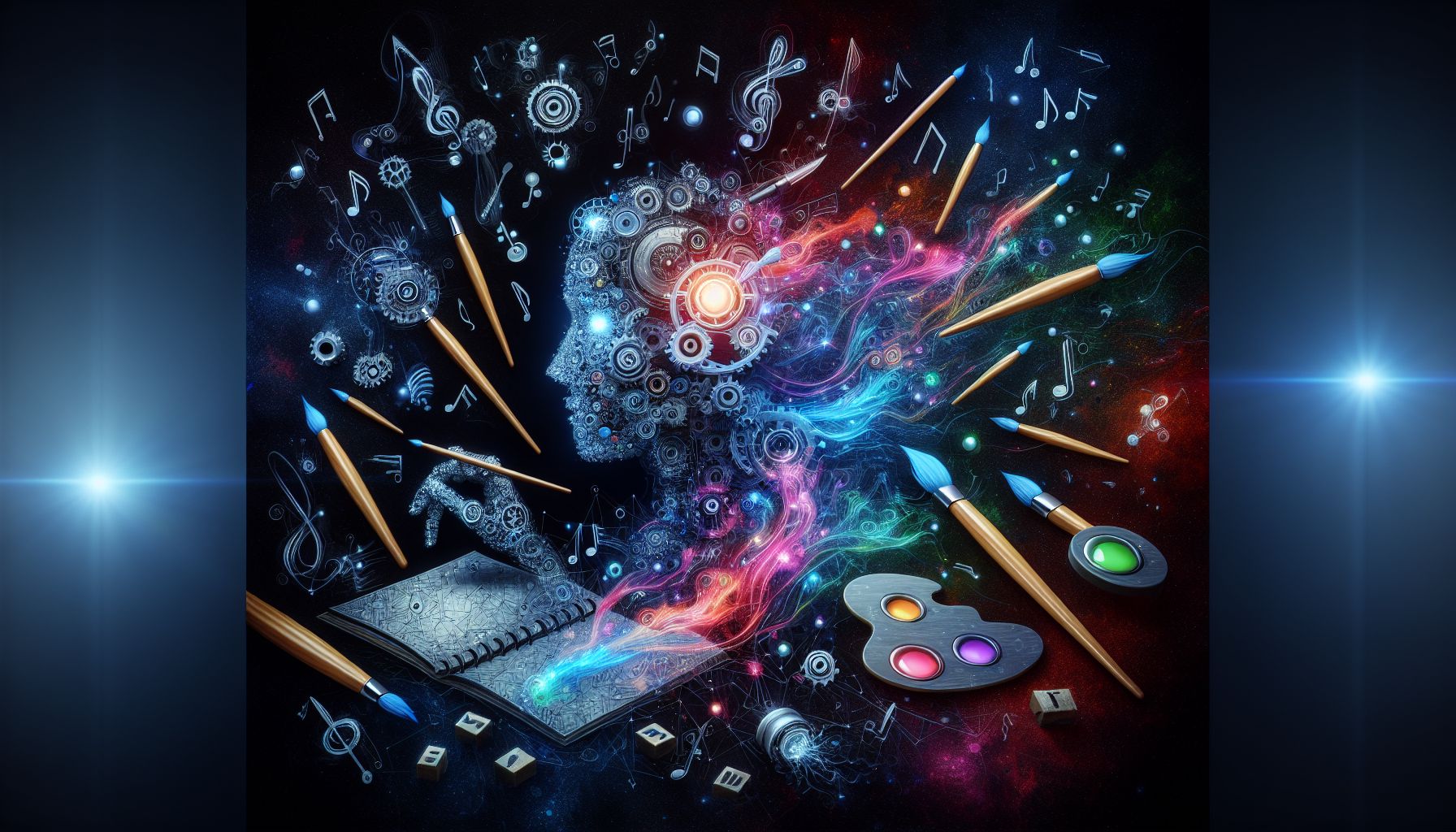
Hey tech enthusiasts! Today, we’re diving into a topic that’s close to my heart—how Artificial Intelligence is shaking up the creative arts space. We’re exploring this wild fusion of tech and artistry that, to me, feels like modern-day alchemy. Let’s jump beyond the cold data corridors of AI into a realm where creativity and function collide.
A (Not-So) Distant Past
Before we jump into the present and future, let’s take a quick stroll down memory lane. Back in the day—I’m talking a mere decade or two ago—thinking of a machine creating art sounded like the opening pitch for a sci-fi blockbuster. Fast forward to now, and we’ve got machines that can paint, write poetry, compose symphonies, and even dance. AI isn’t just part of the creative process anymore. Sometimes it’s leading the whole show.
Remember when DeepDream, Google’s neural network, turned the internet upside down with its psychedelic art? It was crazy, bewildering, and totally electrifying! Criticisms aside, it showed us that AI could do more than just crunch numbers and process languages. It could be—dare I say—philosophical.
AI’s New Canvas: The Present
AI’s current relationship with art is like a collaborative dance. Let’s check out some of the key areas where AI is making its mark.
Music Magic
Think AI and music, and my mind instantly hops to OpenAI’s MuseNet. This tech can generate old-school rock or weave mesmerizing classical symphonies. It’s like having a buddy jam along with you, whose riffs are unpredictable but often genius.
Startups like Amper Music are pushing boundaries, allowing musicians to create custom soundtracks without classical music training. It’s leveling the playing field in a way that brings tears of joy to anyone with a musical idea but lacking the instrumental skill. Goodbye, writer’s block!
Painting with Pixels
AI-assisted programs like DeepArt and RunwayML let anyone express themselves artistically. These tools recreate styles like Van Gogh or Picasso and keep getting better. It’s fun and a little freaky to watch an AI mimic the brushstrokes of legends, but it’s undeniably inspiring.
Penning Poetry and Prose
Turning text inputs into beautiful, story-rich outputs is another trick AI has learned. GPT models have crafted poems and stories that, while sometimes off-base, have genuinely touched hearts. I once asked an AI for a poem on “hope,” and what it produced was endearing, layered, and far beyond mere algorithmic gibberish.
Platforms like Wordsmith can churn out narrative reports, letting businesses and individuals spin rich tales in seconds. Okay, so maybe they won’t win a Pulitzer quite yet, but give it time.
Drawing the Line: Implications and Challenges
Every revolution brings its challenges. Here’s what’s brewing in the creative space right now, with some pretty big concerns emerging.
The Human Touch
Sure, AI can create—but without the human touch, can it truly call itself art? While machines follow patterns and algorithms we program them with, we humans tap into emotions, experiences, and often our souls to express ourselves. There’s this depth and unpredictability we have that machines are only beginning to scratch. Can AI ever bring the rawness of a human experience onto its artificial canvas? Your guess is as good as mine!
Who Creates? Who Owns?
Ah, the age-old question! If an AI co-writes a novel or composes a song, who owns the rights? The user? The developer of the software? The AI? (Okay, maybe not the last one). The legal frameworks struggle to catch up with the whirlwind pace of technological advancements, and this tangled web of ownership might take years, if not decades, to fully unravel.
Bigger Bang for Your Buck?
While AI democratizes creativity, it also poses an existential threat as more art can be produced at lightning speed. There’s a risk that, in a world so saturated with content, the value of human-created art diminishes as AI output floods every niche of our media consumption. It’s a debate worth having over a coffee (or perhaps a virtual meeting)!
Gazing Into the Crystal Ball: The Future
Peering into the future, I can’t help but feel giddy about the possibilities. Imagine AI not only assisting but augmenting the creative process. It’s like imagining the next Renaissance powered by silicon chips and neuron-like networks.
In the coming years, we might witness more collaborative pieces across the arts, with AI and humans forging art that one alone could not conceive. The digital tools could refine, suggest, inspire, and coax out our best creative selves. Maybe you’ll be waxing poetic with a digital muse or plotting an epic odyssey with your local AI sidekick.
Wrapping It Up with a Bow
AI in creative arts is a brave new world, one that’s exciting, a little unnerving, but ultimately enriching. It’s this accidental marriage of precision and passion. As AI continues its wild ride through this artistic frontier, I find myself perched on the edge of my seat, eager to see each unfolding chapter.
While challenges simmer beneath the surface, what we have is an unprecedented opportunity to redefine creativity for coming generations. And who knows, the next masterpiece that captures the human experience may just be a collaboration between man and machine.
So to all art enthusiasts and tech aficionados, let’s embrace this change, pen those digital strokes, compose those virtual melodies, and forge a future where creativity knows no bounds.