
The Thing Nobody Wanted to Say Out Loud
Around February 2025, Andrej Karpathy coined a term that made a lot of us uncomfortable: vibe coding. The concept was simple enough to explain but unsettling in its implications. You point your AI assistant at a problem, it generates the solution, you review it for vibes, you ship it. The developer becomes a director rather than a builder. Within weeks, the term spread through Discord channels, Hacker News threads, and engineering Slack communities like a virus nobody had immunity to.

I watched it happen in real time. Smart people I respect started talking about it unironically. Not as a joke. Not as a worst-case scenario. As the actual future of getting code written. And here’s what bothered me most: they weren’t wrong about the efficiency gains. They were just wrong about the cost.
Look, I’m not some grumpy gatekeeping senior engineer mad that the kids have it easier. I’m the opposite. I’ve spent fifteen years building things, mentoring people, and watching the industry solve genuine problems. But when you remove the friction of learning, you remove something essential. And now we’re seeing what that looks like at scale.
The Numbers Don’t Lie (Even When We Wish They Did)
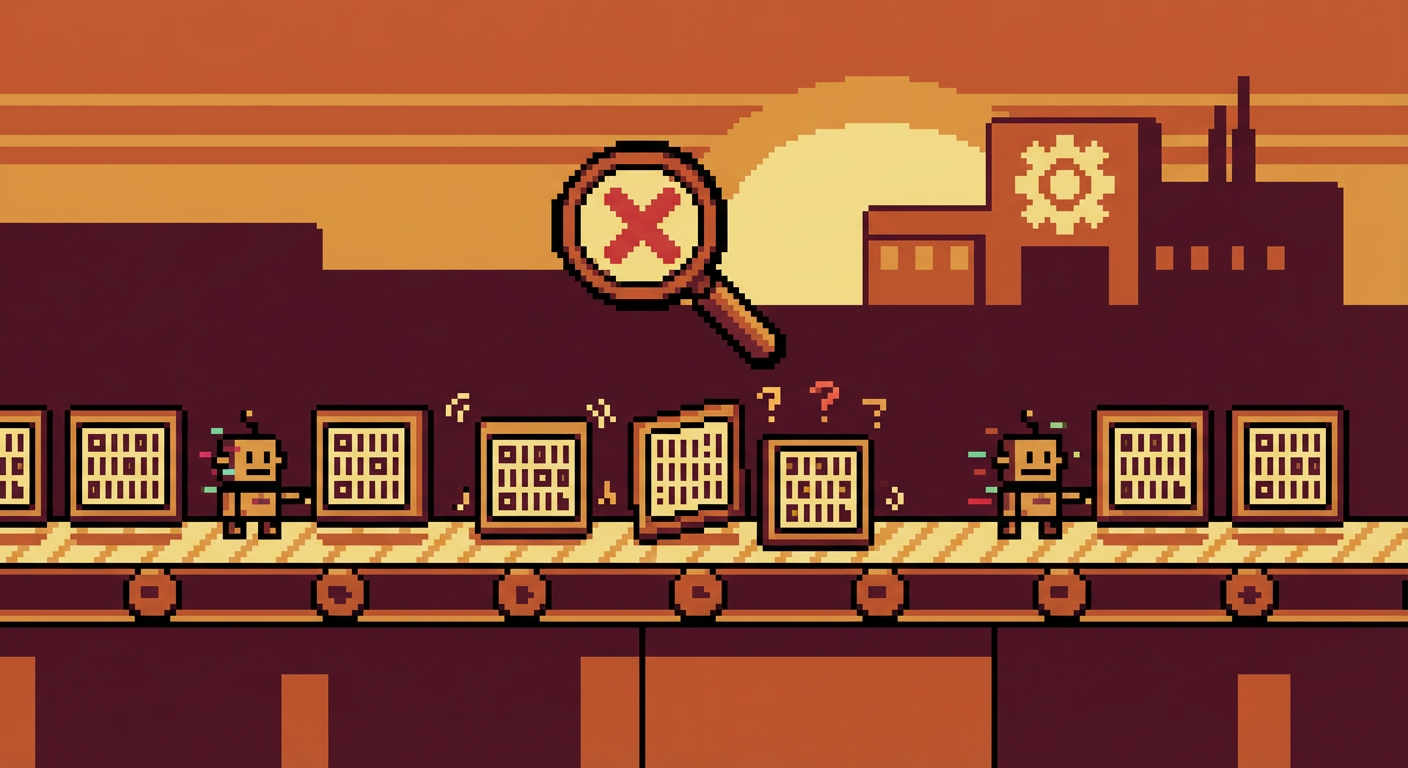
Let’s start with what Uplevel found when they analyzed engineering teams leaning hard into AI-assisted coding. The metrics looked beautiful at first glance: 40% faster time-to-PR. That’s real. That’s not marketing speak. Teams were shipping code twice as fast. But then they looked at what happened after merge. Post-deployment bug reports jumped 41% within the first month. Read that again. Faster shipping. More bugs finding customers.
That’s not a marginal increase. That’s a warning light flashing red on the dashboard, and it keeps getting louder. Uplevel Developer Productivity Research showed that this trade-off wasn’t unique to one company or one team. It was systematic. Reproducible. Predictable.
Meanwhile, entry-level hiring got gutted. Revelio Labs data from 2025 showed a 22% year-over-year decline in new graduate software engineer job postings at companies over 1,000 employees. Two-thirds of the way through a decade where we supposedly need more engineers, we’re hiring fewer junior developers. Why pay someone to learn when the AI can do it faster?
Stripe’s Audit Report Should Have Been Required Reading
I remember reading Stripe’s internal audit findings from late 2025. It landed somewhere between depressing and validating. Their engineering team found that LLM-generated code had a specific failure signature: off-by-one errors, incorrect error-handling patterns, bugs that slipped past CI pipelines because they weren’t the kind of bugs static analysis catches.
These weren’t showstopper issues. They were subtle problems that haunt codebases, cause customer-facing incidents at odd hours, and require someone who actually understands the domain logic to debug. And the people who understand domain logic are the ones getting laid off.
I had coffee with an engineer I mentored three years ago. Smart person. She got caught in one of the 2025 junior dev layoffs. The feedback was basically, “We’re restructuring around AI-first workflows.” Translation: we don’t need people learning the fundamentals anymore. We need people managing LLMs. Except nobody has actually trained anyone to do that well.
The Complexity Problem Nobody’s Talking About Yet
An IEEE Software editorial from mid-2025 cited preliminary data from three major tech companies. Small sample size, but the direction was consistent: codebases where more than 50% of commits came from AI-assisted writing showed statistically higher cyclomatic complexity scores within 12 months. The code got weirder and harder to understand.
This makes sense if you think about how these tools work. They optimize for “code that works,” not “code that’s maintainable.” They have no stake in the next engineer who inherits this mess. They don’t care about consistency, local patterns, or the decision the team made three sprints ago to handle edge cases a specific way.
So what you end up with is technically correct code. Buggy, yes. But structurally correct. It just happens to be arranged in ways that maximize token efficiency instead of human understanding. Every layer of vibe coding adds another layer of entropy to the system.
What Happens to the Industry When Nobody Learns Anymore
This is the part that keeps me up at night. Not because I’m worried about job security. I’ve got enough experience that I’m positioned fine. I’m worried about the next cycle. The one after this.
Every generation of engineers learns from the generation before. You inherit patterns, mistakes, hard-won lessons. You make your own mistakes, learn your own lessons, pass them forward. When you compress that learning curve, you don’t eliminate it. You just delay it, and you delay it until you’ve built enough complexity that fixing it becomes existential.
We’re seeing the first cracks. Andrej Karpathy’s original vibe coding post sparked the conversation, but where we are now is very different from February. People are asking harder questions. What happens to debugging skills? What happens to architectural thinking? What happens when the AI gets something subtly wrong and nobody knows how to fix it?
The hiring cliff for junior engineers isn’t temporary. It’s structural. And it’s not just about fairness or mentorship philosophy. It’s about capability, about building a pipeline of people who understand the fundamentals deeply enough to know when the AI is lying to them.
What Actually Works (And What I’m Watching)
Here’s what I’m seeing work at teams that aren’t burning down their production systems: AI as a tool, not a replacement. Senior engineers using it for boilerplate and scaffolding. Junior engineers using it to write code faster while still reviewing it carefully enough to actually learn. No vibe coding. Just coding with better tooling.
The math works out differently when you do it that way. Slower than vibe coding, sure. But the bugs don’t spike. The complexity doesn’t explode. People actually get better at building things instead of directing machines to build things. Turns out there’s value in that.
I’d genuinely like to hear what you’re seeing on the ground. Not the LinkedIn version. The actual version. Are you noticing the bugs? Are you seeing the complexity creep? Are you hiring junior engineers or replacing them with prompt engineers? Most teams don’t realize they’re at an inflection point yet. Hit me up in the comments or on Twitter.