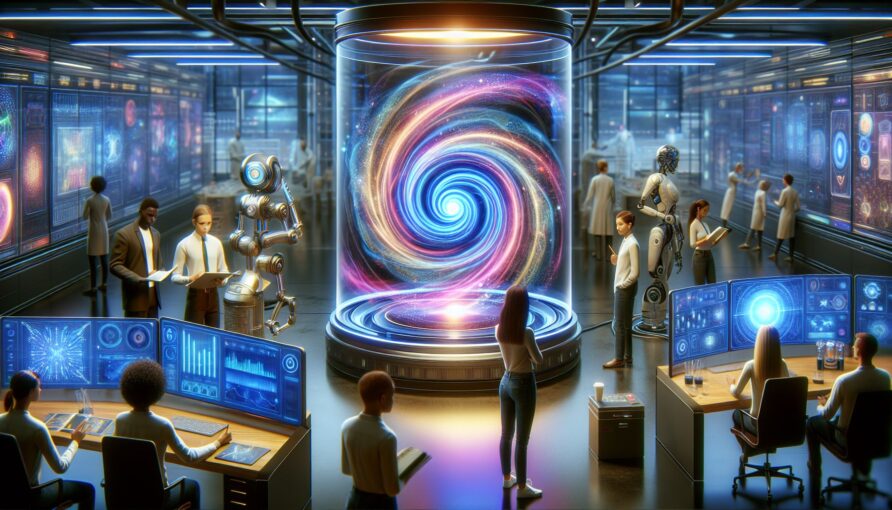

Hey folks, welcome back to my cozy corner of the internet where I jabber excitedly about all things tech—and today, we’re diving deep into a topic that’s as hot as the core of the sun itself: nuclear fusion. Yep, you heard me right! If you thought nuclear fusion was just something fit for sci-fi novels and Star Trek reruns, hold your dilithium crystals, because recent breakthroughs are bringing it closer to reality than ever before.
Why All the Buzz about Nuclear Fusion?
First off, let’s set the stage. Nuclear fusion, for the uninitiated, is the process that powers our very own sun. It’s that mystical cosmic ballet where hydrogen atoms collide at ludicrous speeds and smoosh together, releasing a ridiculous amount of energy in the process. Unlike its cousin, nuclear fission (think Chernobyl or Three Mile Island), nuclear fusion doesn’t produce long-lived radioactive waste. So, it’s cleaner, safer, and potentially, a limitless source of power. That’s right, folks—one teaspoon of hydrogen could theoretically power an entire city. I’m not even kidding.
But why now? Well, there’s been a flurry of activity recently that’s making nuclear fusion the darling of the energy world. Let’s break down why this technology could change everything from how we power our homes to how we tackle climate change.
The Recent Breakthroughs
1. Hitting the Milestone: Ignition
One of the most headline-grabbing moments came from none other than the National Ignition Facility (NIF) in California. After decades of researchers in lab coats tinkering with lasers and humorously over-complicated gizmos, they finally hit a major milestone: ignition. This is fusion lingo for the point when the energy output of a fusion reaction beats the energy used to start it. Kind of important if you want it to be a viable energy source, right?
This is like trying to make a bonfire on a rainy day and finally getting the wood to not just catch fire, but to roar cheerfully despite the drizzle. Imagine a room full of sleep-deprived scientists bursting into spontaneous applause—that’s exactly what happened at NIF.
2. ITER: The Super-collider of Fusion
Meanwhile, across the pond, the ambitious ITER project is gathering steam (not literally, we hope). Located in the southern fields of France, ITER is essentially a global clubhouse where nations from around the world have pooled their resources to overcome the technical hurdles of harnessing fusion power. Think of it as a fusion potluck, where everyone brings something to the table.
Just last year, they successfully installed a crucial component: the giant magnet (or, as I like to call it, the ‘oomph-machine’), which will help confine the superheated plasma. This beast of a magnet is strong enough to lift an aircraft carrier, and, boy, don’t we all wish we had one of these in our garages for those pesky stubborn screws.
The Implications: Clean, Green, and Limitless
Okay, so what if we actually nail this whole fusion thing? Here’s how it could transform everything:
Environmental Impact
For starters, fusion could solve the pesky issue of carbon emissions. While I appreciate my neighborhood’s valiant efforts of biking to work and banning plastic straws, fusion offers a zero-carbon alternative that could render fossil fuels as obsolete as fax machines.
Energy Independence
Nations that are currently at the mercy of fluctuating oil prices will breathe a sigh of relief. Instead of worrying about geopolitical tiffs in oil-rich regions, they could rely on fusion for a stable energy supply. It means more autonomy and possibly more stability worldwide. Imagine a world where wars over oil become as irrelevant as fighting over who gets the last slice of pizza (except nobody’s worried about pizza at all, they’re all fusion-powered now).
Economic Boom
Nailing fusion means a gold rush 2.0 for tech and energy sectors. With fusion power plants popping up, there’d be jobs galore in construction, engineering, operations, and maintenance. It could trigger widespread economic growth like a never-ending tech unicorn herd stampeding across Wall Street.
Challenges on the Cosmic Horizon
All is not yet peachy on the fusion front, though. There’s a comedy of obstacles that researchers face before we realize this utopian energy vision.
Technical Hurdles
The engineering challenges of confining and sustaining a reaction hotter than the sun itself can’t be overstated. We’re talking about controlling plasma at 100 million degrees. My toaster struggles with consistent browning, so imagine the complexity of machines that need to handle such conditions.
Financial Burdens
Nuclear fusion isn’t cheap, friends. The cost of research and development involves some eye-watering figures that can make even the most audacious venture capitalist flinch. It’s like that luxury car you’ve always dreamed of but with a maintenance fee that brings you back to reality with a thud.
Regulatory Snags
Even if we whistle past the technical and financial roadblocks, there’s the labyrinthine maze of regulations to navigate. It’s like playing a board game where the rules change when you’re one space from winning. Governments will need to craft new regulatory frameworks that adequately address safety, environmental impact, and public perception.
The Starry-eyed Future
Now, let’s indulge in a bit of speculation, shall we? Imagine a world where fusion drives energy production and space travel. Yep, those dreamers at SpaceX and Blue Origin could leverage fusion technology to power long-distance missions—it’s the bonkers sci-fi stuff that could very well become plausible.
Plus, on terra firma, fusion could power desalination plants to provide fresh water, revolutionize industries, and even supercharge AI computations for next-gen robots that might… well, let’s save that discussion for another day.
Conclusion
As we hurtle forward into this century, nuclear fusion stands out as a beacon of hope in our quest for sustainability. Yes, there are daunting challenges, but c’mon, if we put a man on the moon using computers less powerful than your phone’s calculator app, surely we’re tech-savvy enough to make fusion a reality. So, fellow nerds and science enthusiasts, keep your eyes on the stars and your hearts hopeful. Because fusion might just light up our future in spectacular, cosmic fashion.