
The Benchmark Theater Nobody Wants to Admit We’re Watching

When the Numbers Stop Making Sense

Early 2025 was supposed to be the moment when AI coding assistants crossed some invisible finish line. OpenAI’s o3 dropped a 71.7% score on SWE-bench Verified, the standard measure of whether a model can actually resolve real GitHub issues. Everyone lost their minds. Think pieces wrote themselves. Venture capitalists recalculated their spreadsheets. And somewhere in Mountain View, engineers probably opened a few more energy drinks.

The Benchmark Theater Nobody Wants to Admit We're Watching
The Benchmark Theater Nobody Wants to Admit We’re Watching

But here’s the thing nobody really wants to say in public: the benchmark creators themselves flagged the whole thing as potentially compromised. That same month, when they released their February paper, they essentially said, “Yeah, we have no idea if our test set leaked into training data.” That’s not a minor footnote. That’s a structural problem. You don’t get to claim victory when the referee is shrugging about whether the rulebook got mixed up with the playbook.

I’ve been writing code long enough to know that when something feels too clean, too perfectly right, there’s usually rust underneath the paint. This felt very clean.

The 12% Reality Check That Got Buried

Then came mid-2025. Uplevel, this independent auditing firm, decided to do something radical: they actually watched how 850 professional engineers used these frontier models in their daily work. Not in lab conditions. Not solving contrived GitHub issues. Real pull requests. Real production deadlines. Real “oh crap, can this thing help me understand this legacy codebase before the standup” moments.

The result? Models leading the benchmark leaderboards showed only a 12% real-world task completion advantage over second-tier models. Twelve percent. After all the breathless reporting, after the 71.7% headline, after the structural overhauls of entire product roadmaps, the actual gap between first and second place in practical engineering was basically rounding error territory.

Think about that for a second. We’ve been living in a state of permanent disruption theater because of a number that, in production, barely matters. An engineer using o3 gets their thing done maybe 12% faster than someone using the runner-up. That’s not nothing, sure. But it’s not the Cambrian explosion everyone was writing blog posts about.

Then Princeton Opened the Box We Didn’t Want Opened

Late 2025 brought SWE-bench Multimodal. Turns out when you add visual context to coding problems, when you require actual systems-thinking instead of just parsing text and predicting the next token, everything falls apart. All the frontier models tanked. Below 40%. We’re talking about a 30+ point crater between the headline benchmark and the harder variant.

This is the part that keeps me up at 3 AM. Not the failures themselves, but what they expose: the benchmarks we’ve been using to make trillion-dollar infrastructure decisions are measuring something fundamentally different from actual engineering work. They measure GitHub issue resolution in a textual vacuum. They miss the visual debugging, the architectural decisions that require holding three different systems in your head simultaneously, the domain knowledge that lives outside the training corpus.

Anthropic, to their credit, saw this coming. When Claude 3.7 Sonnet shipped in February with extended thinking and a solid 62.3% SWE-bench score, their model card read like a public service announcement. Direct quote: benchmark scores shouldn’t be interpreted as production engineering capability proxies. That’s Anthropic politely saying, “Yes, we know everyone is using this wrong.”

The Tools Win by Feel, Not by Numbers

But here’s where it gets interesting. The Pragmatic Engineer newsletter ran a developer survey in Q4 2025 asking senior engineers how they actually choose their AI coding tools. Seventy-one percent said they pick based on subjective workflow feel. Workflow feel. Not benchmark scores. Not published metrics. How it feels when they’re using it at 2 PM on a Wednesday afternoon trying to unblock themselves.

That’s engineers voting with their actual preferences, and they’re voting against the thing we’ve all been pretending to care about. They’re saying the benchmark arms race is theater. That the real differentiation lives somewhere the metrics can’t quite reach. Maybe it’s latency. Maybe it’s how well it handles ambiguous requirements. Maybe it’s just “I don’t have to rephrase my prompt six times to get something usable.”

This matters because it tells us something about how technology adoption actually works versus how we tell stories about it. The SWE-bench leaderboard is a comprehensive, open standard. It’s auditable. It’s fair. It’s also basically irrelevant to the decision-making process for most practitioners. We built a pristine measuring stick for something that engineers don’t actually care about measuring.

What Actually Matters When the Benchmarks Blur

So where does that leave us? I think it leaves us needing to be more honest about what we’re measuring and why. Check out SWE-bench official leaderboard and methodology if you want to understand the technical scope. It’s solid work. It’s just solving a different problem than the one we’ve convinced ourselves matters most.

The real question for 2026 isn’t going to be “whose benchmark score is highest.” It’s going to be “which tool actually reduces the friction in my development workflow.” That’s harder to measure. It’s specific to context. It doesn’t compress into a single percentage point. And it’s exactly where the actual product differentiation lives.

For Anthropic Claude 3.7 Sonnet model card and technical report, they understood this. They competed on the benchmarks, sure, but they were careful to contextualize what those numbers meant. That’s the kind of intellectual honesty I respect.

The benchmark war produced some genuinely interesting technical work. The models are better than they were two years ago by orders of magnitude. But the war itself is a distraction from what actually matters: building tools that engineers reach for because they solve real problems well. The numbers are real. They’re just not the story we should have been telling.

What’s your experience? Have benchmark scores influenced how you’ve actually adopted these tools, or are you in that 71% using feel as the deciding factor? I’d genuinely like to know what’s happening in the field beyond what the leaderboards tell us.


Cursor vs. Windsurf vs. GitHub Copilot in 2026: A Pragmatic Breakdown for Developers Who’ve Used All Three

The State of Play: Numbers That Actually Matter

Let me cut through the venture-backed noise. Cursor crossed 500,000 paid subscribers in late 2025 and pulled down a Series B at a $9.9 billion valuation. That’s not just impressive, it’s genuinely rare in developer tooling. GitHub Copilot hit 1.8 million paid users according to Microsoft’s earnings call, growing enterprise adoption 55% year-over-year. Windsurf, the newer entrant from Codeium, launched in November 2024 and immediately forced the conversation to shift.

The race isn’t about feature parity anymore. It’s about whose mental model of “AI coding” actually survives contact with real production environments. And here’s the thing nobody’s talking loudly about: all three platforms are competing for developers who are increasingly skeptical. We’ve seen enough demo videos to know that watching ChatGPT generate a React component isn’t the same as shipping it.

Cursor: The VS Code Displacement Play

Cursor’s fundamental advantage is architectural. It’s built on a fork of VS Code, which means the switching cost for most of us is basically zero. You open it. Your keybindings work. Your extensions work. Your muscle memory works. That’s not a small thing when you’re asking someone to change their daily driver.

The real differentiation came with Agent mode. You point it at a problem, and it doesn’t just suggest code. It orchestrates across files, runs your terminal, reads your test output, and iterates. Windsurf launched with this concept first as “Cascade,” but Cursor’s integration feels more native because it doesn’t feel like you’re handing control to a separate system. It feels like your editor got slightly smarter.

That said, Cursor’s rapid growth has created a real problem: cost at scale. The subscription model works fine for individual developers, but when you’re thinking about team adoption, the math gets harder. You’re looking at either per-seat licensing or hoping the company figures out enterprise pricing before you need it.

Windsurf: The Agentic Bet

Windsurf came out swinging with Cascade, and it was the first time I saw an AI editor actually handle non-trivial refactors without requiring constant hand-holding. You could tell it to restructure a module across multiple files, and it would do the work, run your tests, and show you a diff. That’s not the same as asking for code suggestions.

The problem is that Windsurf is a completely new editor. Your keybindings don’t transfer. Your muscle memory doesn’t transfer. You’re building a new mental model of where things are. For someone who’s spent a decade with VS Code, that’s a real ask. Codeium seems to understand this, and they’ve been investing in making Windsurf feel less alien, but it’s still fighting an uphill battle against installed base inertia.

Where Windsurf shines is for teams that aren’t deeply locked into VS Code extensions. If you’re starting fresh or using JetBrains IDEs primarily, Windsurf’s agentic model feels less like a feature and more like a genuine shift in how you approach coding tasks. But the market reality is that most of us aren’t starting fresh.

GitHub Copilot: The Enterprise Standard

Copilot’s strength isn’t features. It’s that it’s baked into GitHub, Azure DevOps, and increasingly, the rest of the Microsoft stack. It’s the path of least resistance for enterprises that have already decided their developer platform is Microsoft-flavored. The 55% year-over-year growth in enterprise adoption isn’t because Copilot added amazing new capabilities. It’s because procurement got easier.

For individual developers, Copilot as a VS Code extension is fine. It’s competent. It does line completion well. But if you’re interested in agentic workflows or multi-file reasoning, you’re going to notice the gap between what Copilot can do and what Cursor or Windsurf can do. Copilot feels like the feature that came first, and the other two feel like they understood what the feature should have been from the start.

The honest take: Copilot wins on convenience and integration, not on raw capability. For most corporate environments, that’s exactly the winning strategy.

The Hidden Cost Nobody’s Calculating Right

Here’s what breaks the sales narratives wide open. The Stack Overflow 2025 Developer Survey AI section found that 78% of developers using AI coding tools report spending more time reviewing AI-generated code than they initially expected. Vendors promised you’d ship faster. Instead, you’re running code review boot camps.

The JetBrains State of Developer Ecosystem 2025 report identified something even more granular: context window size is the top technical limitation cited by developers using AI assistants. 67% of respondents regularly hit limits on multi-file tasks. This matters because the problem isn’t the model’s reasoning capability. It’s the information architecture. The AI can’t see your whole project, so it can’t make globally correct decisions.

All three platforms are pushing toward larger context windows, but this is still the fundamental constraint. Cursor’s recent updates have improved context management significantly. Windsurf’s agentic approach can sometimes work around the problem by reading files explicitly. Copilot mostly just tells you the limit exists and asks you to be more specific.

Which One Should You Actually Use in 2026

The honest answer depends on three specific questions. First: how much of your day do you spend in a code editor versus in terminals, documentation, and debugging? If you’re mostly in the editor, Cursor’s advantages compound. If you’re bouncing between contexts constantly, Windsurf’s agentic model might save you cognitive load.

Second: how much are you willing to invest in context management? All three require you to be explicit about what the AI should know. You can’t just ask vague questions and expect gold. The developers who are happiest with these tools are the ones who treat them like collaborative colleagues and set clear scopes.

Third: what does your team already use? This isn’t romantic. It’s practical. If your team uses GitHub heavily and you’re in an enterprise Microsoft shop, Copilot is the path of least organizational friction. If you’re in a polyglot environment or a smaller team with flexibility, Cursor is the safer bet because it respects your existing muscle memory while adding real capability.

Windsurf remains the wildcard. It’s the best reasoning engine in the group right now, but it’s asking you to move your entire workflow. That’s only worth it if the capability gain is substantial enough to justify the switching cost.

The space is still moving fast. What’s true today about context windows or agentic capabilities will probably be outdated by Q4. But the first-principles question never changes: does this tool let you spend more of your time on problems that are actually interesting, or does it just create a new class of busywork called “reviewing AI output?”

What’s your experience been? Are you using one of these regularly, or are you still skeptical? Drop a line if you’ve found something that actually changed how you work.

The Invisible Foundation: How Open Source Became Our Critical Infrastructure

The Quietly Radical Reality Beneath Every Website

Stop what you’re doing. Think about the last website you visited. The one you’re on right now is almost certainly running on open source software. Not maybe. Not probably. The data is almost boring in its certainty: over 96 percent of the world’s top million web servers run Linux. That’s not some niche operating system for hobbyists. That’s the foundation of modern digital civilization, built and maintained largely by volunteers and under-resourced teams who often don’t have the budget to hire enough people to handle support tickets.

The Invisible Foundation: How Open Source Became Our Critical Infrastructure

This is what happens when something works so well that it becomes invisible. Infrastructure has this quality. You notice the power grid when it fails, not when it works. Same with open source. Apache, Nginx, PostgreSQL—these tools underpin billions of dollars in enterprise revenue across every industry you can name. Healthcare systems depend on them. Financial institutions route transactions through them. Your favorite streaming service probably wouldn’t exist without them. Yet the conversation around open source oscillates wildly between hype cycles and complete indifference, rarely landing on the simple truth: this is how the internet actually works.

Illustration for The Invisible Foundation: How Open Source Became Our Critical Infrastructure

The Structural Problem Nobody Wants to Admit

Here’s the thing that keeps me up at night, and I’ve been doing this long enough to recognize a pattern when I see one. Open source works too well. It works so well that massive corporations have built empires on top of it without building anything back. They extract value, ship products, generate billions in market cap, and when a critical project needs funding, they contribute a rounding error from their charitable foundation while issuing press releases about their commitment to community.

The burnout is real and it’s accelerating. Maintainers of foundational projects report working twelve-hour days on code that powers systems they’ll never own. Some of them work day jobs. The psychological toll is compounded by legal exposure—more on that in a moment—and by the simple fact that gratitude doesn’t pay rent. This isn’t sustainable and everyone knows it. We hit a breaking point around 2020 when several high-profile projects essentially said “we’re done” and the industry collectively gasped before going back to normal.

The good news is that some things have actually changed. GitHub started paying maintainers through their Sponsors program, which has distributed over thirty million dollars to creators. Major tech companies began establishing formal funding programs. The Open Source Initiative continues doing foundational work on licensing and governance. These are real commitments, not theater. But they’re still treating a systemic problem with individual band-aids.

Liability Just Became Everybody’s Problem

Let me introduce you to something that’s going to reshape open source in ways most people haven’t thought through yet: the EU Cyber Resilience Act. This regulation introduces liability frameworks that could hold open source projects responsible for security issues in their software. Think about that for a second. A volunteer maintainer in Romania now faces potential legal exposure for bugs that show up in enterprise systems operated by corporations with billion-dollar security budgets.

The regulation is well-intentioned. Security debt is real. We all know projects where the security practices are held together by hope and good intentions. But the implementation creates perverse incentives. Small projects might simply disappear rather than operate under legal threat. Some maintainers might require corporate sponsorship just to have liability insurance. Others might move to jurisdictions without these regulations. This isn’t theoretical. It’s already happening.

The deeper issue is that regulations written by people who don’t understand how open source actually works tend to break it in subtle ways. A maintainer spending thirty hours a week on a critical security library isn’t running a business. They’re performing a public good. Treating them like a software vendor fundamentally misunderstands the social contract. The policy problem and the funding problem are connected. You can either pay people to maintain infrastructure or you can create legal frameworks that scare them away. Pick one.

The Language Wars Are Reshaping System Security

Something genuinely interesting is happening at the level of low-level systems programming, and it’s worth understanding because it changes what’s possible going forward. Rust is replacing C in critical infrastructure. The Linux kernel is integrating Rust modules. Amazon Web Services has built significant portions of their systems in Rust. This isn’t fashionable language adoption. It’s a recognition that certain classes of bugs—the ones that have plagued C for four decades—can be prevented at compile time rather than debugged at 3 AM when your system is on fire.

The transition is slow because it has to be. You can’t rewrite everything overnight. But the trend is clear. When you have a choice between writing safety-critical code in C and Rust, and you have two equally skilled teams, the Rust system will have fewer vulnerabilities. This matters for open source specifically because the projects that form the bedrock of infrastructure—kernel components, container runtimes, network protocols—these benefit most from that guarantee.

This also creates an interesting dynamic where open source projects become laboratories for new approaches to system design. The best ideas migrate into production. The failures are public. This transparency is how we collectively get smarter about building reliable systems. It’s messy but it works.

What Actually Needs to Happen

The internet works because thousands of talented people decided to build things and share them. That’s not going to change. But the economic model around that generosity has become strained. The path forward requires three things that are currently happening unevenly. Sustainable funding mechanisms that don’t require maintainers to become entrepreneurs or corporate employees. Legal frameworks that recognize the difference between a business selling software and a community maintaining shared infrastructure. Better governance structures within projects themselves so that burnout doesn’t destroy critical tools.

Some of this is happening. Companies are starting to treat open source contributions as legitimate business expenses rather than PR exercises. Check out GitHub Open Source to see the scale of what’s being built and maintained. The statistics are sobering in their scope. Developers globally contributed over ninety million pull requests last year. The vast majority of those people were not paid to do it.

The real question isn’t whether open source survives. It will. The question is whether we build sustainable structures around it before another round of burnout crashes a critical project that half the internet depends on. Because that will happen eventually if we don’t treat this like the infrastructure problem it is. When it does, we’ll collectively decide we care for about six months, fund some initiatives, and then drift back to complacency until the next crisis.

If you’re building systems on top of open source—which, let’s be honest, you are—spend some time thinking about what you’re extracting and what you’re contributing. It doesn’t have to be code. It could be funding. Documentation. Security audits. Evangelism. The people maintaining the tools you depend on noticed you already exist. They’re just waiting to see if you’ll notice them back.

The Real Cost of Multi-Cloud in 2026: AWS re:Invent 2025 Promises vs. Actual Egress Bills

The Great re:Invent 2025 Promise

AWS showed up to re:Invent 2025 with a message tailored for the jittery enterprise crowd: S3 is getting cheaper, and we’re locking in zero-egress deals with select CDN partners. The subtext was thick enough to cut with a knife. Google Cloud and Azure have been nipping at their heels, and Amazon knows it. The announcement landed hard in the cloud optimization community. Finally, they seemed to say, the egress tax gets addressed.

The Real Cost of Multi-Cloud in 2026: AWS re:Invent 2025 Promises vs. Actual Egress Bills

Here’s the thing though. I’ve been doing this long enough to recognize when an announcement feels good because it’s supposed to feel good. The S3 price cuts are real. The CDN partnerships are real. But the real cost of multi-cloud in 2026 has almost nothing to do with either of these things.

The 89% Problem Nobody’s Talking About

According to the Flexera 2026 State of the Cloud Report, 89% of enterprises have a multi-cloud strategy. Read that number again. Nearly nine out of ten. But only 28% of those enterprises have actually deployed mature cost governance tools across all their cloud providers. That gap isn’t a market opportunity. It’s a cautionary tale.

The math is unforgiving. If you’re running workloads across AWS, Azure, and Google Cloud without visibility into your actual egress patterns, you’re flying blind. Gartner’s 2025 Cloud Cost Optimization report pegged wasted cloud spend at 35% of total enterprise cloud budgets. Multi-cloud networking costs are increasingly where that waste lives. It’s not dramatic. It’s slow, steady, and utterly predictable if you know where to look.

I’ve walked through enough cost analyses to spot the pattern. Teams get excited about multi-cloud flexibility. They deploy across regions. They federate databases. They build distributed systems that look beautiful on an architecture diagram. Then three months later, somebody notices the egress line items and starts sweating.

The Egress Fee Ceiling Nobody Wants to Admit

Cloudflare’s 2025 Bandwidth Alliance data gives a real-world snapshot of what’s actually happening out there. For high-volume transfers between major cloud providers operating outside formal alliance agreements, you’re looking at $0.08 to $0.09 per GB in egress fees. Not per terabyte. Per gigabyte. On a busy microservices cluster moving around 100 TB of data monthly between regions and providers, that’s a solid six-figure bill nobody budgeted for.

The alliance agreements help. They’re not nothing. But they come with conditions. You need to use their CDN. You need to route through their edge locations. You need to accept their preferred architectures. Sometimes that works perfectly. Sometimes it means retrofitting your entire deployment topology.

Check the AWS data transfer pricing breakdown if you want to see exactly how the layers stack. Standard inter-region transfer is $0.02 per GB. But add in Cross-AZ, add in NAT gateway charges, add in the fact that you’re moving data between three different providers, and suddenly you’re in territory where pricing calculators start showing error messages.

Google Cloud’s Cross-Cloud Network: Elegant, Incomplete

Google Cloud Next 2025 brought Google Cloud’s Cross-Cloud Network to the table as a potential solution. The idea is sound. Simplified connectivity between cloud providers. Unified networking planes. What’s not to like?

The catch is architectural. The system requires workloads to run in supported regions using supported configurations. For many enterprises, that’s a non-starter. Your legacy infrastructure doesn’t live in Google Cloud’s preferred zones. Your compliance requirements lock you into specific geographic boundaries that don’t align with their offering. Your existing vendor relationships make platform switching expensive and slow.

It’s a good solution for the 15% of companies building greenfield applications. For everyone else, it’s a future-state roadmap that feels relevant but isn’t quite ready to carry the weight of actual production systems.

What Actually Works in 2026

If you’re serious about multi-cloud economics in 2026, here’s what matters. First, deploy comprehensive cost governance tooling across all providers immediately. The 72% of enterprises without it are hemorrhaging money in ways their CFOs can’t even articulate. Second, ruthlessly optimize your data gravity. Keep hot data on the provider where your workloads actually run. Use replication and caching to move cold data between clouds only when absolutely necessary.

Third, negotiate from a position of informed strength. If you know exactly how many gigabytes you’re moving and where, you can have real conversations with your providers about committed egress rates. AWS, Google Cloud, and Azure all have commercial teams that can make deals happen, but they need leverage. Data transparency creates leverage.

Fourth, think seriously about whether multi-cloud is actually serving your business goals or just your team’s comfort with optionality. There are excellent reasons to run multi-cloud: reducing vendor lock-in, distributing disaster recovery, managing compliance complexity. But “because we might want to switch later” costs real money now. Make sure the tradeoff makes sense for your specific situation.

Cloud pricing as a surprise is becoming a thing of the past. Cloud pricing as a conscious architectural choice is where we’re headed. AWS’s re:Invent announcements fit within that shift, but they’re the floor, not the ceiling. The real work happens in the cost governance layer, in the data movement patterns, in the honest conversations about whether multi-cloud serves strategy or indulges fear. Have you found anything in your infrastructure that’s forced you to reconsider your multi-cloud approach? I’d genuinely like to hear about it.

DOGE’s Federal IT Cuts Are a Masterclass in What Not to Do to Legacy Infrastructure

The Setup: When Budget Cuts Become a Security Incident

I’ve been doing this long enough to recognize a particular flavor of disaster. It’s the kind that unfolds across quarters, accelerated by people who mean well but have never actually owned a pager for critical infrastructure. The Department of Government Efficiency made some moves in early 2025 that belong in a case study titled “How to Systematically Weaken Your Own Attack Surface.”

DOGE's Federal IT Cuts Are a Masterclass in What Not to Do to Legacy Infrastructure
DOGE’s Federal IT Cuts Are a Masterclass in What Not to Do to Legacy Infrastructure

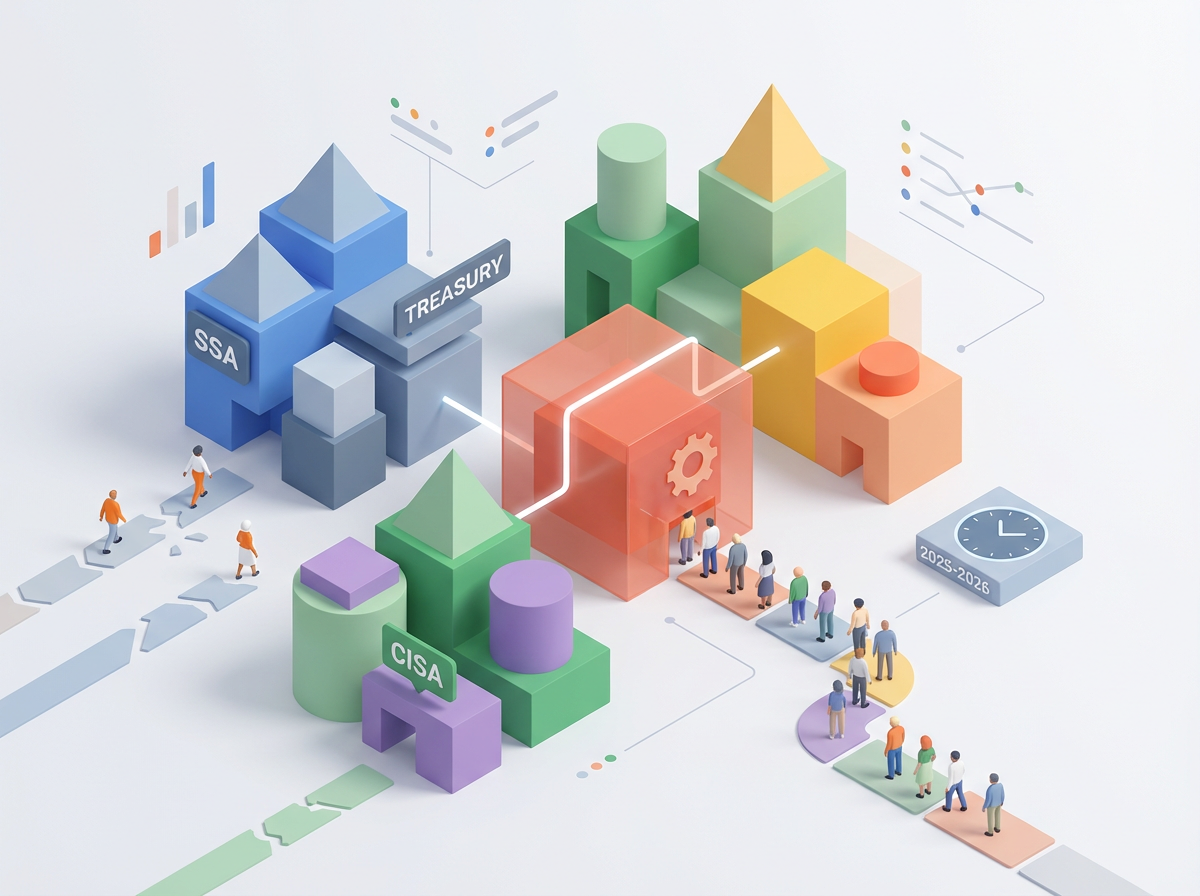
Let’s be direct: DOGE terminated contracts and staffed down across multiple agencies. The Social Security Administration. The Treasury Department. CISA. And not in a “trim the fat” way. We’re talking thousands of IT and cybersecurity personnel gone. When you’re moving that much volume through a system, the physics of the problem don’t change based on your confidence level.

The Treasury situation in February 2025 is particularly instructive. DOGE-affiliated personnel gained access to the Bureau of the Fiscal Service payment systems, which handle roughly 5.45 trillion dollars annually. That’s not just “critical infrastructure.” That’s the financial nervous system of the country. The access incident triggered congressional oversight hearings because apparently moving that fast without operational security protocols is considered newsworthy.

Illustration for DOGE's Federal IT Cuts Are a Masterclass in What Not to Do to Legacy Infrastructure
Illustration for DOGE’s Federal IT Cuts Are a Masterclass in What Not to Do to Legacy Infrastructure

The Cybersecurity Talent Problem: You Can’t Rehire Institutional Knowledge

Here’s what I wish more executive-level people understood: cybersecurity staffing isn’t like warehouse positions. When you cut CISA headcount by an estimated 130 people in early 2025, you’re not just cutting salary lines. You’re losing people who understand the topology of federal vulnerability networks, the relationships with vendors, the institutional knowledge of what threats actually matter versus what the internet is currently panicking about.

Former CISA Director Jen Easterly called it exactly what it is. Testifying in early 2025, she characterized staffing reductions during a period of escalating nation-state threats as a “strategic own goal.” She’s right. Groups like Volt Typhoon have demonstrated sophisticated, patient reconnaissance capabilities. You don’t face that threat profile by going leaner on the people who coordinate vulnerability responses across federal systems.

The CISA workforce reduction coverage – CyberScoop captures the alarm in the security research community. People who actually track threat landscapes for a living were essentially saying, “Did you just unilaterally decide to make our job harder during the hard part?” It’s the kind of move that makes you wonder if anyone in the room had ever read a post-incident report.

The Vulnerability Database Bottleneck: Infrastructure Debt Comes Due

Now let’s talk about something less visible but potentially more damaging: the National Vulnerability Database situation. NIST’s NVD has been laboring under staffing and funding constraints since early 2024, which carried through 2025. The result is a backlog of thousands of CVEs waiting for enrichment analysis. That’s the part where actual humans evaluate the security research, contextualize the risk, and make the information actionable.

Without that step, vulnerability data becomes noise. Organizations can’t prioritize patches. They can’t assess real risk. They can’t make resource allocation decisions. It’s like having an early warning system that only works after you already know the disaster happened. You can check the NIST NVD backlog status tracker yourself. The queue is real, and it reflects something deeper: a decision to underfund the infrastructure that literally everyone else depends on.

This is the part that frustrates me most as an engineer. Legacy infrastructure doesn’t become less critical when you stop paying attention to it. It becomes more fragile. The debt compounds. You can ignore a vulnerability backlog for a while, but somewhere in that pile of unanalyzed CVEs is something that matters, and you won’t know which one until an adversary shows you.

What Happens When You Treat Infrastructure Like a Cost Center

The broader pattern here is treating federal IT as a line item to optimize rather than as a system that enables everything else. DOGE operated from a thesis that these organizations had bloat, and maybe some of them did. But the staffing reductions came down like a sledgehammer, not a scalpel. The Treasury access incident should have been a signal that the pace was wrong, but it got processed as a political controversy rather than as operational feedback.

Here’s what I’ve learned from debugging enough critical systems: you can’t rebuild trust and institutional knowledge as quickly as you can destroy it. When the talented people leave, they take context with them. When you reduce security staffing, the adversaries don’t leave too. They escalate. When you let vulnerability databases get backlogged, you’re choosing to operate with incomplete information about your own attack surface.

The counterargument is usually about efficiency. The counterargument is usually wrong. Federal IT systems are complicated because government is complicated. Private companies with simpler operations still dedicate significant resources to security and infrastructure. The idea that you can run the Treasury Department’s payment systems on a reduced security team while adversaries like Volt Typhoon are actively probing federal networks isn’t efficiency. It’s gambling with other people’s money.

The Lesson: Infrastructure Needs Skeptics, Not True Believers

The genuinely useful part of cost scrutiny is asking: does this actually work? Are we getting what we’re paying for? But that question requires someone on the inside who understands what “working” means in context. It requires iteration and feedback, not a predetermined reduction target met regardless of operational impact.

What concerns me going forward is that the damage from these cuts will manifest slowly. A delayed vulnerability analysis doesn’t crash systems immediately. Reduced cybersecurity staffing doesn’t show up in quarterly reports. The Treasury access incident looked like a contained problem until Congress started asking questions, and by then the staffing reductions were already in motion.

The honest version of infrastructure management is unglamorous. It’s boring people doing reliable work in systems nobody notices until they fail. It’s vulnerability databases getting enriched by people you’ve never heard of. It’s CISA analysts coordinating patches across federal agencies before attackers can weaponize the gaps. Not sexy. Necessary.

If you’re watching this unfold and you work in federal IT or security, you probably have thoughts. I’d genuinely like to hear them. Drop a comment or get in touch if you’ve experienced the operational fallout from these reductions. We’re in the middle of the story, and the next chapter gets written by what actually happens when institutional knowledge gets replaced by budget lines.