

Salt Typhoon’s $47 Million Lesson: Why Your Network Architecture Decisions in 2026 Will Define Your Career

The Breach Nobody Should Have Been Surprised About

Late 2024 hit different. The FBI and CISA confirmed what security researchers had been muttering about in Slack channels for months: Chinese state-sponsored actors had spent over a year living rent-free inside at least nine major US telecom carriers. AT&T, Verizon, and others. The big names. The ones we’re supposed to trust with our infrastructure. And they got in through doors that should have been locked years ago.

Salt Typhoon's $47 Million Lesson: Why Your Network Architecture Decisions in 2026 Will Define Your Career
Salt Typhoon’s $47 Million Lesson: Why Your Network Architecture Decisions in 2026 Will Define Your Career

Here’s the thing that gets me as an engineer: this wasn’t sophisticated. It wasn’t some zero-day weaponized at a nation-state facility. The attackers exploited legacy SNMP configurations, unpatched edge devices from Cisco and Fortinet, and networks that had no meaningful segmentation. According to the CISA Salt Typhoon advisory, these were known, fixable problems. The kind of things you write down in your architecture review and then… don’t do because it’s expensive and nobody’s screaming about it yet.

Except someone was screaming. We just weren’t listening hard enough.
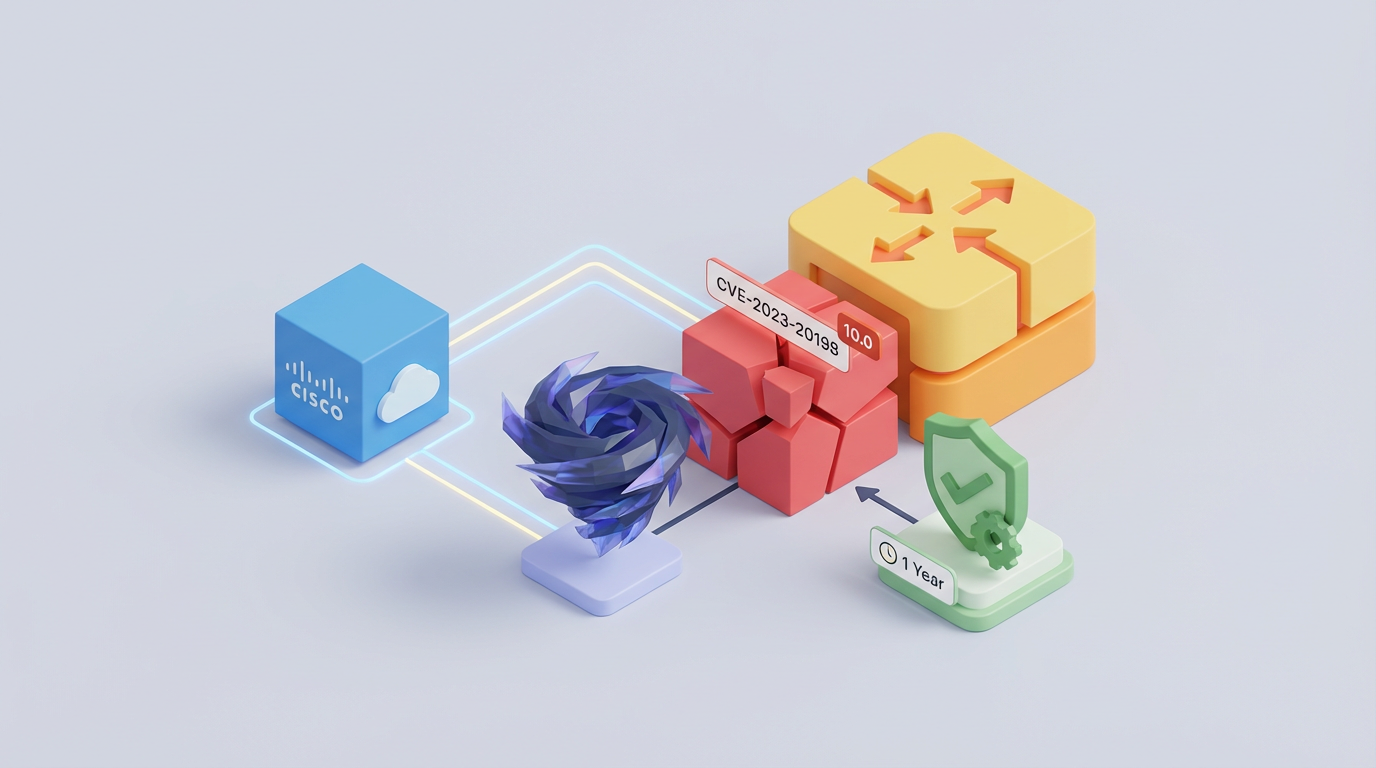
Illustration for Salt Typhoon's $47 Million Lesson: Why Your Network Architecture Decisions in 2026 Will Define Your Career
Illustration for Salt Typhoon’s $47 Million Lesson: Why Your Network Architecture Decisions in 2026 Will Define Your Career

The $47 Million Reality Check

Mandiant’s February 2025 report landed like a punch. Seventy-three percent of affected organizations needed full re-architecture of their carrier-grade network management interfaces. Not patches. Not configuration tweaks. Full. Re-architecture. And the bill? North of $47 million per carrier on average. That’s not a typo. That’s the cost of fixing what should never have broken in the first place.

Think about that number for a moment. That’s not just remediation spend. That’s the cost of retraining teams on new architectures, the downtime coordinating with regulatory agencies, the forensic work to understand what was accessed and when, and the infrastructure rebuild that should have happened incrementally but now has to happen all at once. It’s the cost of delay, compressed into a brutal present.

For individual engineers reading this, here’s the career signal: organizations that can articulate why architectural debt becomes operational debt are about to become very, very valuable. You know that tech lead who keeps pushing for network segmentation when everyone else wants to ship faster? They’re about to get vindicated in a way that comes with promotion conversations and better offers.

Cisco’s CVE-20198 and the One-Year Patch Gap

Let’s talk about CVE-2023-20198. Cisco disclosed this vulnerability in their IOS XE platform with a perfect CVSS score of 10.0. Perfect. Worst possible. And here’s the engineer’s nightmare: a patch had been available for over a year before anyone confirmed Salt Typhoon actors were actively exploiting it. One year. In that year, how many security meetings happened? How many “we’ll patch next quarter” conversations? How many people decided it wasn’t critical enough?

This is the part that should terrify you if you work anywhere near network operations. You can do everything right on your side. You can write pristine code, you can design elegant systems, but if your dependencies aren’t patched and you don’t have visibility into whether they are, you’re basically relying on luck. And luck, as we’ve now learned at the nation-state scale, is not a security strategy.

For engineers building systems that touch carrier infrastructure or anything adjacent to it, this is your canary in the coal mine. Your architecture needs to assume that dependencies will be exploited before patches are applied. Not after. Before.

January 2025: The FCC Finally Blinks

The FCC issued new cybersecurity rules under Section 105 of the Communications Act in January 2025. First annual cybersecurity risk management plans mandated by federal regulation for carriers. This isn’t guidance. This isn’t a suggestion. This is law, and it’s going to ripple through every organization that touches telecom infrastructure in ways we’re just starting to understand.

What this actually means for you as an engineer: the era of “security is nice to have” is over. Dead. Not in five years. Now. Organizations are already staffing up for compliance. They’re hiring architects who understand regulatory frameworks. They’re promoting engineers who can explain why a system design either helps or hurts their compliance posture. The FCC cybersecurity rulemaking proceeding is where the jobs are going to be.

More importantly, this is where your credibility gets built. If you’ve been saying “we need to implement proper network segmentation” and leadership kept saying “too expensive,” you now have federal regulators who agree with you. Use that. Respectfully. But use it.

What You Actually Build Differently Starting Now

Here’s what changes in your actual day-to-day: you stop accepting “we’ll patch in Q3” as an answer. You start treating network segmentation like it’s not optional infrastructure anymore. You build observability into systems that are adjacent to critical infrastructure like your job depends on it. Because now it actually might.

If you’re an architect, you’re re-evaluating every legacy protocol and every edge device in your design. SNMP without authentication? That’s not a known issue anymore. That’s a liability. Unpatched Cisco or Fortinet boxes? Same thing. Flat networks with no segmentation? This is the year you draw a line and say no.

If you’re a junior engineer, pay attention to whoever in your organization is leading the Salt Typhoon remediation efforts. That person is about to become extremely valuable. Learn from them. Understand their reasoning. This is the most practical cybersecurity education you can get, and it’s happening right now at your company.

The Salt Typhoon breach wasn’t interesting because it was sophisticated. It was interesting because it was a perfectly documented case study in why architectural decisions made years ago suddenly cost tens of millions to fix. The lesson isn’t new, but the price tag is impossible to ignore.

What’s your experience been so far with rebuilding systems in response to Salt Typhoon? What architectural decisions in your systems feel suddenly urgent? Drop a comment or reach out. I’m genuinely curious what the front lines look like in different organizations right now.


OpenTofu 1.9 vs. Terraform 1.10: When a Fork Becomes a Real Alternative

The Fork That Actually Stuck

In August 2023, HashiCorp made a decision that fractured the infrastructure-as-code community. They switched Terraform’s license from Mozilla Public License 2.0 to the Business Source License, a move that essentially told open-source purists their free ride was ending. The Linux Foundation didn’t waste time. Within months, OpenTofu emerged as a community-backed fork, and here we are in early 2026 watching what happens when someone calls a corporation’s bluff and actually builds an alternative.

This isn’t theoretical anymore. OpenTofu has crossed into genuine competitive territory. The project now sits at over 23,000 GitHub stars with more than 4 million weekly downloads as of January 2026. That’s a 166% jump from the 1.5 million downloads recorded at launch. These aren’t vanity metrics. When infrastructure teams download a tool 4 million times per week, they’re voting with their CI/CD pipelines.

What makes this moment interesting isn’t the fork itself. Open-source forks happen constantly. What matters is that OpenTofu has achieved something forks rarely do: it’s become the preferred choice for a meaningful portion of the market.

State Encryption: The Feature That Matters

Let’s talk about what separated OpenTofu 1.9 from Terraform 1.10 on the technical level, because this is where the fork stops being symbolic and starts being real. OpenTofu 1.9 introduced native end-to-end state encryption. Terraform’s open-source tier doesn’t offer it.

State files in Terraform are where the magic happens and where your secrets live. If you’re managing infrastructure at any serious scale, your state file contains database passwords, API keys, encryption keys, and enough sensitive information to make a security auditor weep. Terraform Cloud offers encryption at rest, but that’s the paid tier. The open-source version? You’re responsible for securing your own state backend. Most teams use S3 with server-side encryption, which works fine until it doesn’t. OpenTofu took the harder path and built encryption into the tool itself.

This matters more than it might seem. If you’re a mid-market company that can’t justify Terraform Cloud costs, or if you’re philosophically opposed to relying on HashiCorp’s managed service, OpenTofu’s native encryption closes a gap that’s been festering since Terraform became popular. You get enterprise-grade state management without the enterprise pricing model.

The IBM Era and What It Means for Terraform’s Direction

Here’s the thing nobody wants to say out loud but everyone’s thinking: HashiCorp’s acquisition by IBM in April 2024 for 6.4 billion dollars changed the energy. IBM doesn’t acquire companies to maintain them as experimental playgrounds. IBM acquires companies to fold them into enterprise platforms and extract revenue.

Terraform 1.10 has been incrementally good. Stability improvements. Performance tweaks. The releases work. But they feel managed rather than driven. The community’s watching Terraform 1.10 and asking a question that’s hard to take back once you ask it: are we going to see the same velocity of innovation we saw pre-acquisition? When your corporate parent has quarterly earnings calls to worry about, open-source innovation starts looking like a cost center rather than a strategic advantage.

OpenTofu doesn’t have that problem. It’s got Linux Foundation governance, which means decision-making happens in the open and nobody’s quarterly revenue depends on pushing certain features over others. The CNCF Technical Oversight Committee accepted OpenTofu as a sandbox project in early 2025, the same governance pathway that Kubernetes and Prometheus used to build enterprise credibility. That’s not luck. That’s institutional legitimacy.

Migration Is Happening Faster Than Anyone Expected

The Pulumi State of Infrastructure as Code survey from January 2026 surveyed 1,200 platform engineers and found that 31% had already migrated at least one environment from Terraform to OpenTofu. That’s a three-fold increase from 11% the year prior. In enterprise decision-making, 20-point swings in adoption within 12 months don’t happen by accident. They happen when enough people conclude that the alternative is worth the switching costs.

Switching infrastructure-as-code tools is not trivial. You’ve got state migration, provider compatibility validation, team retraining, and the lurking fear that you’ll discover an edge case in production at 2 AM. Teams don’t make these moves lightly. The fact that 31% have already migrated at least one environment tells you something: the perceived benefits are outweighing the switching friction.

What makes this migration wave meaningful is the directionality. These aren’t teams forcing OpenTofu on themselves as some philosophical purity test. These are teams running a cost-benefit calculation and concluding that OpenTofu solves their actual problems better than Terraform does right now.

What This Means for Your Infrastructure Decisions

If you’re building new infrastructure or refreshing your tooling strategy, OpenTofu deserves serious consideration. The documentation is solid. The provider ecosystem is growing. The community is active and genuinely invested in making this work. OpenTofu official documentation and changelog is worth reviewing, and the Linux Foundation OpenTofu project page lays out the governance structure backing the project.

If you’re deep in the Terraform ecosystem already, there’s no need to panic. Terraform still works. It’s still supported. But you should probably start thinking about what an OpenTofu migration path looks like for your organization, because the fork just became real competition, and competition is usually good for the ecosystem. When vendors have to earn your loyalty instead of assuming it, you win.

The infrastructure-as-code landscape has shifted. The fork isn’t theoretical anymore. It’s 23,000 stars and 4 million weekly downloads. It’s 31% of platform engineers trying it in production. It’s CNCF legitimacy and native encryption and Linux Foundation backing. If you’ve been watching from the sidelines, now’s the time to form an actual opinion.

What’s your take? Have you tested OpenTofu in a sandbox environment yet? I’d be genuinely curious what friction points you’ve hit and whether the migration story actually holds together when you stress-test it against your real infrastructure.

The FinOps Reality Check: Why Your Cloud Bill Is Still Broken (And How to Actually Fix It)

The Waste Elephant in Every Data Center

Let’s start with the uncomfortable truth that everyone already knows but nobody wants to admit at the budget meeting: roughly one-third of cloud spend evaporates into thin air. That’s 32 percent of your total bill just gone, vaporized by underutilized resources, forgotten test environments, and that one service nobody remembers deploying in 2019. The number feels abstract until you do the math on your own invoice. A mid-sized engineering org? That’s probably half a million dollars a year just sitting there, waiting to be reclaimed.

The wild part is that this isn’t some theoretical problem that consultants invented to sell expensive services. It’s mechanical waste. Instances running idle. Storage that nobody touches. Data transfer charges that spike because you forgot to review your cross-region replication settings. The cloud made infrastructure provisioning so easy that it also made waste industrialized.

Here’s where it gets interesting: companies are actually starting to care about this problem. The FinOps Foundation membership exploded 200 percent in just two years. That’s not conference marketing talking. That’s real engineering teams realizing their CFOs aren’t going to keep rubber-stamping exponential cloud spending without some justification.

FinOps Maturity Isn’t Linear, and That’s the Point

The FinOps maturity curve is where theory crashes into reality. Everyone starts at the same place: reactive firefighting. Someone notices the bill is huge. Panic. Meetings. Finger-pointing. Then someone actually tries to trace where the money went and discovers most of your cloud governance lives in Slack messages and tribal knowledge.

The second phase is what kills most initiatives: you hire someone to “do FinOps” and expect it to magically work. Plot twist: it doesn’t. Because FinOps isn’t a person. It’s a practice. It’s engineers caring about efficiency. It’s product teams understanding that infrastructure costs matter. It’s finance actually talking to engineering without treating each other like adversaries. You can’t bolt that on.

The teams that actually mature through this tend to share a pattern. They invest in visibility first. Real visibility. Not dashboards that show up in monthly reviews and never get read again. I’m talking about tagging every resource with cost center and owner. Forcing teams to see their own infrastructure bills weekly. Making it impossible to hide waste behind abstraction layers. Then they start enforcing constraints. Reserved instances and savings plans stop being optional suggestions, they become architectural decisions. Teams that commit to these upfront reduce their cloud bills by 40 to 60 percent. That’s not hype. That’s math.

The Commitment Devices That Actually Work

Reserved instances and savings plans are brutally simple in concept: you pay upfront for lower rates. Yet adoption is still embarrassingly low at many companies. Why? Because it requires commitment. Forecasting. Believing your workload will still be running in three months. That terrifies teams that grew up assuming cloud resources were infinitely flexible.

But here’s the thing: spot and preemptible instances exist for a reason. They’re cheap precisely because they’re interruptible. And they work beautifully for workloads that can handle interruption. Machine learning training jobs? Perfect use case. Batch processing? Obviously. These instance types now power most ML training workloads across the industry. So what are you using them for? If the answer is “I don’t know,” you’re probably leaving money on the table.

The real sophistication comes when teams layer these together. Reserved instances for your baseline load. Spot instances for variable compute. Serverless for the truly bursty stuff. Not because it sounds elegant on a whiteboard, but because each tool has a specific job and a specific cost profile.

The Multi-Cloud Trap (And How to Not Fall Into It)

Multi-cloud strategies are everywhere now. It sounds strategic. Reduce vendor lock-in. Improve resilience. Force competition for your business. In practice, multi-cloud usually means you get to manage cloud cost optimization across two separate billing models, two different pricing systems, two completely different tagging schemas, and your ops team gets to learn twice as many tools. The operational complexity doesn’t just double. It compounds.

I’ve watched teams spend months wrangling FinOps across three clouds while single-cloud competitors quietly shipped features and made their infrastructure cheaper by 30 percent through sheer focus. Not because multi-cloud is wrong, sometimes you need it. But because the cost of that complexity has to justify itself. For most teams below a certain scale, it doesn’t. The hidden engineering tax of managing it eats the theoretical savings from not being locked in.

If you’re genuinely in a multi-cloud scenario, at least use AWS Cost Explorer and equivalent tools at your other providers to maintain some visibility. You’ll want centralized tagging across all clouds. Shared tagging metadata matters more than the cloud you’re running on.

Serverless Isn’t Magic, But It Solves a Real Problem

Serverless compute gets religious arguments. People defend it or attack it like it personally wronged them. Ignore the zealots on both sides and look at what it actually does: serverless computing eliminates idle capacity for event-driven workloads. You don’t pay for CPU when nothing is happening. That matters for certain use cases and doesn’t matter at all for others.

If your workload is running CPU-intensive operations constantly, serverless will probably cost more because of the per-millisecond pricing. But if your job is processing webhooks, transforming data on schedule, or handling spiky traffic, serverless could cut your idle waste dramatically. The key is matching the tool to the workload, not falling in love with the tool itself.

FinOps maturity means getting brutally honest about these tradeoffs. Serverless for this. Containers for that. Reserved instances for the baseline. Spot for the variable bits. Every decision should trace back to your actual utilization patterns and your actual costs, not to what sounds impressive in architecture review meetings.

Start Actually Measuring

The barrier to real cloud cost optimization isn’t technical complexity. It’s accountability. It’s hard to improve what you don’t measure. It’s impossible to improve what you don’t even look at. So before you hire consultants or buy expensive FinOps platforms, do the hard work first. Tag everything. Measure everything. Make the costs visible to the teams spending the money. Then see what happens. Usually you find a 20 percent win just from people realizing they’re being watched.

What’s your biggest cloud cost surprise from this year? What did you expect would be expensive but turned out cheap, or vice versa? The companies winning at FinOps are asking these questions constantly. They’re obsessing about the data. They’re treating cloud efficiency like any other engineering problem: with metrics, iteration, and genuine accountability. Start there.

Platform Engineering Is Eating DevOps: What Backstage 2.0 and Internal Developer Portals Actually Look Like After the Hype

The Structural Shift Nobody’s Talking About Enough

Here’s the thing about DevOps that nobody wants to admit at conferences: it was never actually a job title. It was a philosophy, a cultural directive, a way of saying “stop throwing things over the wall.” But organizations, being organizations, promptly turned it into a job title anyway. Then they hired some people, called them the “DevOps team,” and wondered why the rest of engineering still threw things over walls.

Platform engineering is different. Not philosophically different—philosophically it’s the same “break down silos” message in a shinier coat—but structurally different. And the data backs this up hard. According to the CNCF Annual Survey 2025, 61% of organizations with over 500 engineers now have dedicated platform engineering teams. That’s up from 43% just two years ago. That’s not a trend. That’s a structural reorganization happening at scale.

What’s actually happening is that companies finally figured out what platform engineering is supposed to be: a team that builds internal products for developers. Not infrastructure. Not DevOps. Products. That distinction matters because products get iterated, tested, and refined based on user feedback. Infrastructure gets maintained until someone complains hard enough.

Backstage 2.0 Addresses the Stuff That Actually Mattered

When Spotify open-sourced Backstage a few years back, it was solving a real problem at massive scale: how do you give thousands of developers a coherent view of the systems they own? The early adoption was genuine. The GitHub stars racked up. By the end of 2025, Backstage had crossed 30,000 stars with over 3,000 production adopters according to CNCF data. Those aren’t vaporware numbers.

But here’s where most internal developer portal conversations get fuzzy: the gap between “looks neat in a demo” and “actually runs in enterprise.” Backstage 1.x had some real teeth problems for large organizations. Plugins were a security nightmare. Permissions were a game of Russian roulette. If your developers could access a plugin, they could access whatever that plugin had permissions to access. In a regulated environment, that’s a non-starter.

The Backstage 2.0 release at KubeCon NA 2025 tackled exactly the two things keeping enterprise teams from actual adoption: a proper plugin permissions framework and native AI assistant integration. Not flashy. Not buzzy. Just pragmatic enterprise friction removal. The permissions framework means you can actually let teams use plugins without creating compliance theater. The AI assistant integration means you’re not asking developers to memorize seventeen different command syntaxes to deploy something.

You can dig into the specifics in the Backstage project documentation and changelog, but the pattern here is worth noting: the second-order improvements matter more than the first-order features.

What “Mature” Actually Means in Practice

The platforms that are winning aren’t the ones with the fanciest dashboards. They’re the ones that reduced friction enough to matter. McKinsey published a study in late 2025 comparing organizations with mature internal developer portals to those without, and the numbers are almost absurdly good: 55% reduction in onboarding time for new developers. 32% fewer unplanned downtime incidents.

Stop and think about what those numbers mean. A 55% onboarding improvement isn’t cosmetic. That’s the difference between a developer being productive in three weeks versus three months. That’s compounding value across every hire you make. The downtime reduction is even more interesting because it’s indirect: it suggests that when developers have clear visibility into how systems work and what they own, they break things less often.

But here’s the part that doesn’t make it into the press releases: maturity is boring. It’s not “we built an AI-powered platform that predicts failures.” It’s “we documented our deployment process clearly enough that people read it.” It’s “we made the observability tools searchable by team name.” It’s “we automated the tedious parts so developers stop copy-pasting configs that are two years out of date.”

The Gartner Prediction That’s Already True

Gartner predicted in their 2025 report that by 2026, 80% of large software engineering organizations would have dedicated platform engineering teams. Mid-2026 data suggests we’re tracking ahead of that curve. That’s not because platform engineering is trendy. It’s because having a dedicated team whose job is to make developer experience measurably better actually works.

The math is straightforward. If a platform engineering team of five people saves each of your 200 developers an average of two hours per week, you’ve just freed up the equivalent of half a person’s full-time worth of developer productivity every single week. Do that math for a year. Do it for multiple years. Suddenly a team that costs maybe 2 million annually is delivering 10+ million in unblocked productivity.

The catch is that this only works if the platform team is actually focused on reducing friction for developers, not on having developers conform to whatever platform the team built. The bad implementations I’ve seen treat their internal developer portal like a centralized control mechanism. The good ones treat it like a service. Fundamental difference.

What You Should Actually Be Watching

If you’re evaluating whether your organization needs a proper platform engineering team, ignore the conference marketing. Look at specific friction points: How long does onboarding actually take? How much time do your developers spend on non-feature work? How consistent is your deployment process across different teams? How often do people deploy the same thing twice because they forgot they’d already done it?

Tools like Backstage are useful primarily as accelerators for teams that have already decided they need better developer experience. They’re not magic. You still have to do the hard work of understanding what your developers actually need, building it, shipping it, and iterating based on feedback. The Backstage 2.0 updates suggest the community is maturing past the “let’s add more features” phase and into the “let’s make the existing features actually work reliably” phase. That’s a good sign.

The structural shift is real. The tooling is catching up. The question for you is whether your organization is ready to staff up a team whose job is explicitly to make life easier for developers, or whether you’re still going to treat infrastructure maintenance as something developers should handle in their spare time between features. The data suggests one of those approaches works better. I’ll let you guess which one.

Vibe Coding Is Eating Junior Dev Hiring — And the Consequences Are Starting to Show Up in Production

The Thing Nobody Wanted to Say Out Loud

Around February 2025, Andrej Karpathy coined a term that made a lot of us uncomfortable: vibe coding. The concept was simple enough to explain but unsettling in its implications. You point your AI assistant at a problem, it generates the solution, you review it for vibes, you ship it. The developer becomes a director rather than a builder. Within weeks, the term spread through Discord channels, Hacker News threads, and engineering Slack communities like a virus nobody had immunity to.

Vibe Coding Is Eating Junior Dev Hiring — And the Consequences Are Starting to Show Up in Production

I watched it happen in real time. Smart people I respect started talking about it unironically. Not as a joke. Not as a worst-case scenario. As the actual future of getting code written. And here’s what bothered me most: they weren’t wrong about the efficiency gains. They were just wrong about the cost.

Look, I’m not some grumpy gatekeeping senior engineer mad that the kids have it easier. I’m the opposite. I’ve spent fifteen years building things, mentoring people, and watching the industry solve genuine problems. But when you remove the friction of learning, you remove something essential. And now we’re seeing what that looks like at scale.

Illustration for Vibe Coding Is Eating Junior Dev Hiring — And the Consequences Are Starting to Show Up in Production

The Numbers Don’t Lie (Even When We Wish They Did)

Let’s start with what Uplevel found when they analyzed engineering teams leaning hard into AI-assisted coding. The metrics looked beautiful at first glance: 40% faster time-to-PR. That’s real. That’s not marketing speak. Teams were shipping code twice as fast. But then they looked at what happened after merge. Post-deployment bug reports jumped 41% within the first month. Read that again. Faster shipping. More bugs finding customers.

That’s not a marginal increase. That’s a warning light flashing red on the dashboard, and it keeps getting louder. Uplevel Developer Productivity Research showed that this trade-off wasn’t unique to one company or one team. It was systematic. Reproducible. Predictable.

Meanwhile, entry-level hiring got gutted. Revelio Labs data from 2025 showed a 22% year-over-year decline in new graduate software engineer job postings at companies over 1,000 employees. Two-thirds of the way through a decade where we supposedly need more engineers, we’re hiring fewer junior developers. Why pay someone to learn when the AI can do it faster?

Stripe’s Audit Report Should Have Been Required Reading

I remember reading Stripe’s internal audit findings from late 2025. It landed somewhere between depressing and validating. Their engineering team found that LLM-generated code had a specific failure signature: off-by-one errors, incorrect error-handling patterns, bugs that slipped past CI pipelines because they weren’t the kind of bugs static analysis catches.

These weren’t showstopper issues. They were subtle problems that haunt codebases, cause customer-facing incidents at odd hours, and require someone who actually understands the domain logic to debug. And the people who understand domain logic are the ones getting laid off.

I had coffee with an engineer I mentored three years ago. Smart person. She got caught in one of the 2025 junior dev layoffs. The feedback was basically, “We’re restructuring around AI-first workflows.” Translation: we don’t need people learning the fundamentals anymore. We need people managing LLMs. Except nobody has actually trained anyone to do that well.

The Complexity Problem Nobody’s Talking About Yet

An IEEE Software editorial from mid-2025 cited preliminary data from three major tech companies. Small sample size, but the direction was consistent: codebases where more than 50% of commits came from AI-assisted writing showed statistically higher cyclomatic complexity scores within 12 months. The code got weirder and harder to understand.

This makes sense if you think about how these tools work. They optimize for “code that works,” not “code that’s maintainable.” They have no stake in the next engineer who inherits this mess. They don’t care about consistency, local patterns, or the decision the team made three sprints ago to handle edge cases a specific way.

So what you end up with is technically correct code. Buggy, yes. But structurally correct. It just happens to be arranged in ways that maximize token efficiency instead of human understanding. Every layer of vibe coding adds another layer of entropy to the system.

What Happens to the Industry When Nobody Learns Anymore

This is the part that keeps me up at night. Not because I’m worried about job security. I’ve got enough experience that I’m positioned fine. I’m worried about the next cycle. The one after this.

Every generation of engineers learns from the generation before. You inherit patterns, mistakes, hard-won lessons. You make your own mistakes, learn your own lessons, pass them forward. When you compress that learning curve, you don’t eliminate it. You just delay it, and you delay it until you’ve built enough complexity that fixing it becomes existential.

We’re seeing the first cracks. Andrej Karpathy’s original vibe coding post sparked the conversation, but where we are now is very different from February. People are asking harder questions. What happens to debugging skills? What happens to architectural thinking? What happens when the AI gets something subtly wrong and nobody knows how to fix it?

The hiring cliff for junior engineers isn’t temporary. It’s structural. And it’s not just about fairness or mentorship philosophy. It’s about capability, about building a pipeline of people who understand the fundamentals deeply enough to know when the AI is lying to them.

What Actually Works (And What I’m Watching)

Here’s what I’m seeing work at teams that aren’t burning down their production systems: AI as a tool, not a replacement. Senior engineers using it for boilerplate and scaffolding. Junior engineers using it to write code faster while still reviewing it carefully enough to actually learn. No vibe coding. Just coding with better tooling.

The math works out differently when you do it that way. Slower than vibe coding, sure. But the bugs don’t spike. The complexity doesn’t explode. People actually get better at building things instead of directing machines to build things. Turns out there’s value in that.

I’d genuinely like to hear what you’re seeing on the ground. Not the LinkedIn version. The actual version. Are you noticing the bugs? Are you seeing the complexity creep? Are you hiring junior engineers or replacing them with prompt engineers? Most teams don’t realize they’re at an inflection point yet. Hit me up in the comments or on Twitter.