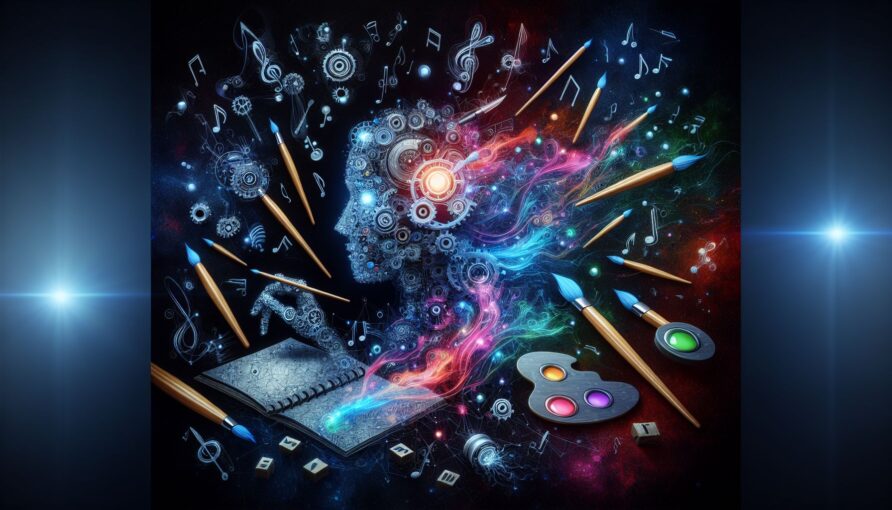
The Art of Creativity: AI in Creative Arts

Hey tech enthusiasts! Today, we’re diving into a topic that’s close to my heart—how Artificial Intelligence is shaking up the creative arts space. We’re exploring this wild fusion of tech and artistry that, to me, feels like modern-day alchemy. Let’s jump beyond the cold data corridors of AI into a realm where creativity and function collide.

A (Not-So) Distant Past

Before we jump into the present and future, let’s take a quick stroll down memory lane. Back in the day—I’m talking a mere decade or two ago—thinking of a machine creating art sounded like the opening pitch for a sci-fi blockbuster. Fast forward to now, and we’ve got machines that can paint, write poetry, compose symphonies, and even dance. AI isn’t just part of the creative process anymore. Sometimes it’s leading the whole show.

Remember when DeepDream, Google’s neural network, turned the internet upside down with its psychedelic art? It was crazy, bewildering, and totally electrifying! Criticisms aside, it showed us that AI could do more than just crunch numbers and process languages. It could be—dare I say—philosophical.

AI’s New Canvas: The Present

AI’s current relationship with art is like a collaborative dance. Let’s check out some of the key areas where AI is making its mark.

Music Magic

Think AI and music, and my mind instantly hops to OpenAI’s MuseNet. This tech can generate old-school rock or weave mesmerizing classical symphonies. It’s like having a buddy jam along with you, whose riffs are unpredictable but often genius.

Startups like Amper Music are pushing boundaries, allowing musicians to create custom soundtracks without classical music training. It’s leveling the playing field in a way that brings tears of joy to anyone with a musical idea but lacking the instrumental skill. Goodbye, writer’s block!

Painting with Pixels

AI-assisted programs like DeepArt and RunwayML let anyone express themselves artistically. These tools recreate styles like Van Gogh or Picasso and keep getting better. It’s fun and a little freaky to watch an AI mimic the brushstrokes of legends, but it’s undeniably inspiring.

Penning Poetry and Prose

Turning text inputs into beautiful, story-rich outputs is another trick AI has learned. GPT models have crafted poems and stories that, while sometimes off-base, have genuinely touched hearts. I once asked an AI for a poem on “hope,” and what it produced was endearing, layered, and far beyond mere algorithmic gibberish.

Platforms like Wordsmith can churn out narrative reports, letting businesses and individuals spin rich tales in seconds. Okay, so maybe they won’t win a Pulitzer quite yet, but give it time.

Drawing the Line: Implications and Challenges

Every revolution brings its challenges. Here’s what’s brewing in the creative space right now, with some pretty big concerns emerging.

The Human Touch

Sure, AI can create—but without the human touch, can it truly call itself art? While machines follow patterns and algorithms we program them with, we humans tap into emotions, experiences, and often our souls to express ourselves. There’s this depth and unpredictability we have that machines are only beginning to scratch. Can AI ever bring the rawness of a human experience onto its artificial canvas? Your guess is as good as mine!

Who Creates? Who Owns?

Ah, the age-old question! If an AI co-writes a novel or composes a song, who owns the rights? The user? The developer of the software? The AI? (Okay, maybe not the last one). The legal frameworks struggle to catch up with the whirlwind pace of technological advancements, and this tangled web of ownership might take years, if not decades, to fully unravel.

Bigger Bang for Your Buck?

While AI democratizes creativity, it also poses an existential threat as more art can be produced at lightning speed. There’s a risk that, in a world so saturated with content, the value of human-created art diminishes as AI output floods every niche of our media consumption. It’s a debate worth having over a coffee (or perhaps a virtual meeting)!

Gazing Into the Crystal Ball: The Future

Peering into the future, I can’t help but feel giddy about the possibilities. Imagine AI not only assisting but augmenting the creative process. It’s like imagining the next Renaissance powered by silicon chips and neuron-like networks.

In the coming years, we might witness more collaborative pieces across the arts, with AI and humans forging art that one alone could not conceive. The digital tools could refine, suggest, inspire, and coax out our best creative selves. Maybe you’ll be waxing poetic with a digital muse or plotting an epic odyssey with your local AI sidekick.

Wrapping It Up with a Bow

AI in creative arts is a brave new world, one that’s exciting, a little unnerving, but ultimately enriching. It’s this accidental marriage of precision and passion. As AI continues its wild ride through this artistic frontier, I find myself perched on the edge of my seat, eager to see each unfolding chapter.

While challenges simmer beneath the surface, what we have is an unprecedented opportunity to redefine creativity for coming generations. And who knows, the next masterpiece that captures the human experience may just be a collaboration between man and machine.

So to all art enthusiasts and tech aficionados, let’s embrace this change, pen those digital strokes, compose those virtual melodies, and forge a future where creativity knows no bounds.
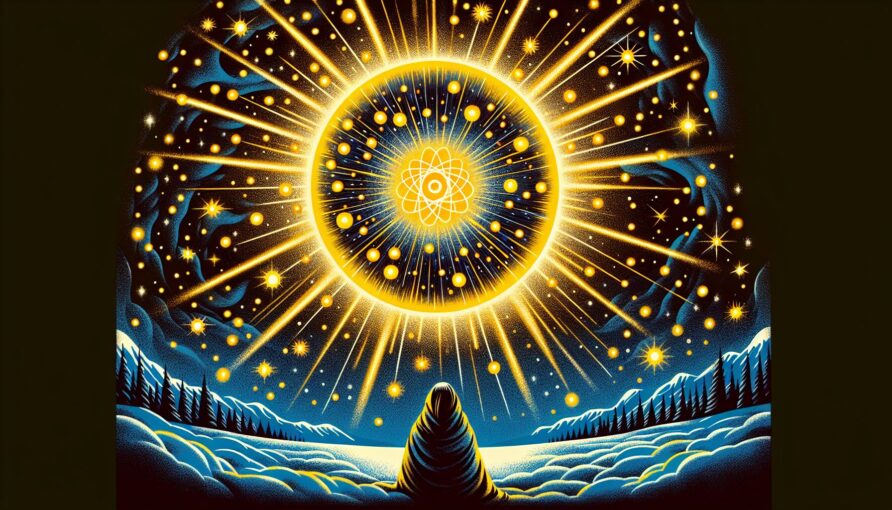
Nuclear Fusion: Our Starry-eyed Hope for Limitless Energy

Hey folks, welcome back to my cozy corner of the internet where I jabber excitedly about all things tech—and today, we’re diving deep into a topic that’s as hot as the core of the sun itself: nuclear fusion. Yep, you heard me right! If you thought nuclear fusion was just something fit for sci-fi novels and Star Trek reruns, hold your dilithium crystals, because recent breakthroughs are bringing it closer to reality than ever before.

Why All the Buzz about Nuclear Fusion?

First off, let’s set the stage. Nuclear fusion, for the uninitiated, is the process that powers our very own sun. It’s that mystical cosmic ballet where hydrogen atoms collide at ludicrous speeds and smoosh together, releasing a ridiculous amount of energy in the process. Unlike its cousin, nuclear fission (think Chernobyl or Three Mile Island), nuclear fusion doesn’t produce long-lived radioactive waste. So, it’s cleaner, safer, and potentially, a limitless source of power. That’s right, folks—one teaspoon of hydrogen could theoretically power an entire city. I’m not even kidding.

But why now? Well, there’s been a flurry of activity recently that’s making nuclear fusion the darling of the energy world. Let’s break down why this technology could change everything from how we power our homes to how we tackle climate change.

The Recent Breakthroughs

1. Hitting the Milestone: Ignition

One of the most headline-grabbing moments came from none other than the National Ignition Facility (NIF) in California. After decades of researchers in lab coats tinkering with lasers and humorously over-complicated gizmos, they finally hit a major milestone: ignition. This is fusion lingo for the point when the energy output of a fusion reaction beats the energy used to start it. Kind of important if you want it to be a viable energy source, right?

This is like trying to make a bonfire on a rainy day and finally getting the wood to not just catch fire, but to roar cheerfully despite the drizzle. Imagine a room full of sleep-deprived scientists bursting into spontaneous applause—that’s exactly what happened at NIF.

2. ITER: The Super-collider of Fusion

Meanwhile, across the pond, the ambitious ITER project is gathering steam (not literally, we hope). Located in the southern fields of France, ITER is essentially a global clubhouse where nations from around the world have pooled their resources to overcome the technical hurdles of harnessing fusion power. Think of it as a fusion potluck, where everyone brings something to the table.

Just last year, they successfully installed a crucial component: the giant magnet (or, as I like to call it, the ‘oomph-machine’), which will help confine the superheated plasma. This beast of a magnet is strong enough to lift an aircraft carrier, and, boy, don’t we all wish we had one of these in our garages for those pesky stubborn screws.

The Implications: Clean, Green, and Limitless

Okay, so what if we actually nail this whole fusion thing? Here’s how it could transform everything:

Environmental Impact

For starters, fusion could solve the pesky issue of carbon emissions. While I appreciate my neighborhood’s valiant efforts of biking to work and banning plastic straws, fusion offers a zero-carbon alternative that could render fossil fuels as obsolete as fax machines.

Energy Independence

Nations that are currently at the mercy of fluctuating oil prices will breathe a sigh of relief. Instead of worrying about geopolitical tiffs in oil-rich regions, they could rely on fusion for a stable energy supply. It means more autonomy and possibly more stability worldwide. Imagine a world where wars over oil become as irrelevant as fighting over who gets the last slice of pizza (except nobody’s worried about pizza at all, they’re all fusion-powered now).

Economic Boom

Nailing fusion means a gold rush 2.0 for tech and energy sectors. With fusion power plants popping up, there’d be jobs galore in construction, engineering, operations, and maintenance. It could trigger widespread economic growth like a never-ending tech unicorn herd stampeding across Wall Street.

Challenges on the Cosmic Horizon

All is not yet peachy on the fusion front, though. There’s a comedy of obstacles that researchers face before we realize this utopian energy vision.

Technical Hurdles

The engineering challenges of confining and sustaining a reaction hotter than the sun itself can’t be overstated. We’re talking about controlling plasma at 100 million degrees. My toaster struggles with consistent browning, so imagine the complexity of machines that need to handle such conditions.

Financial Burdens

Nuclear fusion isn’t cheap, friends. The cost of research and development involves some eye-watering figures that can make even the most audacious venture capitalist flinch. It’s like that luxury car you’ve always dreamed of but with a maintenance fee that brings you back to reality with a thud.

Regulatory Snags

Even if we whistle past the technical and financial roadblocks, there’s the labyrinthine maze of regulations to navigate. It’s like playing a board game where the rules change when you’re one space from winning. Governments will need to craft new regulatory frameworks that adequately address safety, environmental impact, and public perception.

The Starry-eyed Future

Now, let’s indulge in a bit of speculation, shall we? Imagine a world where fusion drives energy production and space travel. Yep, those dreamers at SpaceX and Blue Origin could leverage fusion technology to power long-distance missions—it’s the bonkers sci-fi stuff that could very well become plausible.

Plus, on terra firma, fusion could power desalination plants to provide fresh water, revolutionize industries, and even supercharge AI computations for next-gen robots that might… well, let’s save that discussion for another day.

Conclusion

As we hurtle forward into this century, nuclear fusion stands out as a beacon of hope in our quest for sustainability. Yes, there are daunting challenges, but c’mon, if we put a man on the moon using computers less powerful than your phone’s calculator app, surely we’re tech-savvy enough to make fusion a reality. So, fellow nerds and science enthusiasts, keep your eyes on the stars and your hearts hopeful. Because fusion might just light up our future in spectacular, cosmic fashion.

The Next Frontier in Tech: AI-Driven Creativity

Hey, techies and future enthusiasts! It’s a thrilling time to be alive, especially if you’ve had even a smidge of curiosity about the creative potential of Artificial Intelligence. After guzzling up articles and discussions, I decided to unload some of my excitement into this blog post. Today, let’s dive headfirst into the world of AI in the creative arts—a domain that’s changing fast and really messing with how we think about creativity.

AI: The Unexpected Artist

Alright, so when we think of creativity, AI might not be the first thing that pops into our minds. Creativity is like the magical unicorn of the human experience—complex, unpredictable, and utterly mesmerizing. But, here we are in the 2020s, having conversations about AI that crafts poetry, paints evocative images, and even composes symphonies. Who would’ve thought?

The likes of OpenAI’s GPT and DALL-E are like those mysterious, slightly intimidating art students who surprise you with their impressive portfolios. These systems aren’t just tools; they’re collaborators, albeit ones that never ask if you’ve got any spare change for coffee. GPT models, for instance, have been trained on massive datasets of human language, learning to craft narratives with impressive coherence and style. And then there’s DALL-E, capable of visual creativity, taking text prompts and turning them into pixel-perfect artwork. It’s a wild, wild world out there.

Unleashing Creativity Without Boundaries

One thing that really gets me excited is how AI is democratizing creativity. Imagine having an artist’s studio, a recording studio, and a writer’s desk all rolled into one accessible platform. AI-powered tools are enabling people who might have stared at blank canvases or journal pages, intimidated by their own perceived lack of creativity, to finally unleash their inner artists. It’s not just about professionals using technology to enhance their art; it’s about including everyone in the creative process.

Take music, for example. Software like Google’s Magenta is helping musicians put together new arrangements and even compose new pieces. Picture telling an AI to generate a few bars of melody based on a mood or theme and then rolling with it. Kind of like having an overly enthusiastic bandmate who’s never out of ideas.

The Collaboration Between Human and Machine

Here comes the philosophical bit! What’s fascinating (and a bit mind-boggling) is that AI doesn’t replace human ingenuity; it enhances it. We provide the contextual understanding, emotional depth, and uniquely human touch. AI brings the grunt work, speed, and the ability to process information faster than you can say “Turing Test.” Together, it’s like forming a rock band with a supercomputer on lead guitar.

The Internet is peppered with examples of artists working hand-in-hand (or code-in-hand?) with AI, from futuristic fashion designers using AI-generated patterns to cinema creatives employing AI to storyboard complex scripts. We’re no longer dealing in hypotheticals. Creators are actively embracing AI as a partner that complements, even stretches, their natural abilities.

One Foot in the Future

Let’s peek into the crystal ball for a moment. What’s the endgame here? Are we going to find ourselves in a world where every novel is co-written with AI, or where films are entirely conceived by algorithms who’ll win Oscars? I doubt it, but I wouldn’t rule out some wild collaborations making waves.

Speculation alert! Companies and startups are chugging along toward an era where AI could help solve creative roadblocks or generate rapid-fire ideas while conferring a distinctive style to each project. The way I see it, AI could very well become a standard tool in the creative toolkit, as essential as paintbrushes or musical instruments.

Besides that, we’re also thinking about personalized art experiences. Imagine VR galleries tailored just for you, with AI recognizing your preferences to put together custom art shows. Artists, brands, filmmakers could start moving toward hyper-personalized experiences at unseen scales. It’s not sci-fi, it’s next-gen multimedia reality around the corner.

The Challenges on the Horizon

It wouldn’t be fair to only focus on the candy-colored rainbows of AI creativity without acknowledging a few storm clouds, though. There’s a bag of ethical questions bouncing around like popcorn in a microwave. Who owns AI-generated art? Is it the coder, the data scientist, or the AI itself given the honorary rights?

Moreover, not to sound like a doomsday preacher, but we do need to stay vigilant about biases in AI. If the data training these systems is even somewhat skewed, the outcomes will reflect that, potentially propagating stereotypes rather than erasing them. It’s a tightrope walk, requiring responsible development practices and open discourse.

Also, there’s the question of AI’s impact on jobs. As AI systems prove their worth in creative processes, concerns about job displacement echo through many industries. However, optimists (like me!) believe that rather than replacing creatives, AI will reposition them, freeing up pursuit of original, out-of-the-box ideas while letting AI handle more mundane tasks.

Conclusion

As we probe the intersection where technology meets the arts, this blended reality of AI-driven creativity is invigorating. These advancements ignite both potential and caution, a bountiful mix of excitement for what’s next and diligence to ensure ethical evolution. It’s a field as boundless as our imaginations.

To witnesses of this unfolding story: we’re not observers; we’re participants. Whether you’re a hardcore programmer or a sweet-toothed digital artist, grab some popcorn, scratch that, a quill or brush, and jump in. The era of AI-artistic fusion is just beginning, and I for one, can’t wait to see where this wild ride takes us!

Stay curious and dare to dream, folks. Until next time, keep pushing boundaries and keep challenging the silicon horizon.